 Ultimate guide
Motorcycle Engine Size for Beginners Explained
Quick Summary
Engine size, usually called displacement, is the total volume swept by the pistons in all cylinders, measured in cubic centimeters (cc). Many beginner guides point to the 300cc to 500cc range as a practical starting point for most new street riders, since it balances manageable power with easy handling at low speeds.
- Displacement is measured in cubic centimeters (cc) and a bigger number generally means more potential power.
- Beginner guides often point to 300cc to 500cc as a practical range for most new street riders.
- Engine layout, tuning and weight change how a bike feels, not just cc alone.
- Test power delivery between 15 and 45 miles per hour, where beginners spend most of their time.
- Check that you can reach the ground with both feet before choosing an engine size.
Table of Contents
- What Motorcycle Engine Size Actually Measures
- Motorcycle Engine Sizes CC Chart: From 125cc to 1000cc
- How Motorcycle Engine Sizes and Speed Relate in Practice
- Why Power-to-Weight, Torque, and Throttle Response Matter More Than CC
- What Size Motorcycle Do I Need for My Height and Weight?
- Choosing a Beginner Engine Size by Riding Scenario and Experience
- Used Motorcycle Engine Size for Beginners: Inspection and Resale Tips
- Pick Your First Engine Size and Ask Us About Trade-Ins and Used Inventory
- Frequently Asked Questions
What Motorcycle Engine Size Actually Measures
Last Updated: November 14, 2026
Engine size, usually called displacement, is the total volume swept by the pistons in every cylinder during one full stroke, and it is measured in cubic centimeters (cc). A 500cc engine displaces 500 cubic centimeters of air and fuel per cycle across all its cylinders. A bigger number generally means more potential for power, but it is only one piece of how a bike actually feels to ride.
For most new riders, the number on the spec sheet is a starting point, not a verdict. Many beginner guides point to the 300cc to 500cc range as a practical starting point for most new street riders, because it balances manageable power with a bike that is easy to handle at low speeds.
Here is what displacement tells you, and what it does not:
- Engine layout matters. A single-cylinder engine, a parallel twin and a four-cylinder can share the same displacement but deliver power very differently.
- Tuning changes the feel. Two bikes with identical cc can produce noticeably different throttle response depending on how the manufacturer calibrated the engine.
- Weight changes the outcome. A lighter bike with a smaller engine can feel quicker than a heavier bike with more displacement.
Think of cc as a headline number. The rest of this guide covers the details that decide whether a bike suits you.
Motorcycle Engine Sizes CC Chart: From 125cc to 1000cc
Motorcycle engine sizes run from small learner-friendly machines around 125cc to large touring and performance bikes near or above 1000cc. The table below summarizes the broad categories and the riders each one typically suits.
| Engine Size | Typical Use | Best For |
|---|---|---|
| 125cc to 250cc | Commuting, learning, low-speed city riding | Absolute beginners, short trips |
| 300cc to 500cc | Street riding, city and light highway use | Most new riders |
| 600cc to 750cc | Highway riding, longer trips, more power | Riders with some experience |
| 900cc to 1000cc+ | Touring, performance, heavy highway use | Experienced riders |
Sources disagree on where the beginner range should start. Some guides point to 125cc to 250cc, while others favor 300cc to 500cc.
How Motorcycle Engine Sizes and Speed Relate in Practice
Displacement influences top speed and acceleration, but the relationship is not a straight line, and the reason comes down to gearing and power delivery rather than cc alone.
Here is the mechanism. Top speed is set by how fast the engine can spin in top gear multiplied by that gear's ratio and the final drive ratio.
Acceleration is a different equation. It depends on horsepower divided by weight, plus how quickly the engine builds revs and how the throttle is mapped. That is why displacement comparisons without weight are misleading.
In practice, the speed you can comfortably use depends on your skill, the road and the bike's power delivery. A 300cc to 500cc bike will keep up with traffic on most city streets and handle many highway merges, which covers the majority of early riding.
A common mistake is assuming that more cc means more fun. A bike with a large, abrupt power band can be harder to control at parking-lot speeds, and that is where new riders most often drop a bike.
Watch out: a bike that feels tame on a straight road can still surprise you when the revs climb into its power band, so learn where that band starts before you ride in traffic.
Why Power-to-Weight, Torque, and Throttle Response Matter More Than CC
If you only compare displacement, you miss the characteristics that most affect how a bike feels. Three measures matter more for a beginner, and together they form a practical decision framework that displacement ranges alone cannot provide.
- Power-to-weight ratio. Horsepower divided by the bike's weight tells you how quickly it accelerates. A 500cc bike that weighs less than a heavier machine can feel livelier at city speeds.
- Torque delivery. Torque is the pulling force that gets you moving from a stop. Smooth, low-end torque makes a bike easier to start from junctions and in traffic. A parallel twin tuned for low-end torque will pull cleanly from 2,000 rpm, while a high-revving four-cylinder may feel flat until 6,000 rpm, which is exactly the range a beginner avoids. Look for a torque curve that is broad and flat rather than peaky.
- Throttle response. This is how directly the engine reacts when you twist the grip. Some engines are mapped to feel gentle, which suits learners, while others respond sharply. Ride-by-wire systems and rider modes can soften the initial twist, and many beginner-friendly bikes now offer a rain or low-power mode that cuts peak output by a noticeable margin.
Gearing ties these together. A bike geared short will feel eager and accelerate hard at low speeds but buzz on the highway; a bike geared tall will cruise calmly but feel sluggish from a stop. That is why two bikes with similar cc and similar horsepower can feel completely different in the first 30 miles per hour.
When you test-ride, pay attention to how the bike behaves at 20 to 30 miles per hour, not just how it performs on the highway. That low-speed feel is where beginners spend most of their time. Ask yourself three questions: does it pull cleanly from a stop without stalling, does the throttle respond smoothly to small inputs, and does it feel stable when you roll off the throttle mid-corner?
Watch out: a bike with a sharp throttle and a narrow power band can feel fine on a demo ride and then catch you out in stop-and-go traffic, so spend time at low speed before you commit.
What Size Motorcycle Do I Need for My Height and Weight?
Your height and body weight affect whether a bike is comfortable and controllable, and engine size is only part of that. Seat height determines whether you can plant both feet, and overall weight determines how easily you can hold the bike upright and maneuver it at a stop.
The practical checks are simple:
- Sit on the bike with the kickstand up. You should reach the ground with at least the balls of both feet.
- Lift the bike slightly off its stand. You should be able to steady it without struggling.
- Check the handlebar reach. Your arms should bend comfortably, not stretch.
A rider who is short or light may find a 300cc bike with a low seat more manageable than a larger machine, even if the bigger bike has the same power potential on paper. Use fit and feel first, and displacement second.
Choosing a Beginner Engine Size by Riding Scenario and Experience
The right engine size depends on how you plan to ride and how much experience you have. Match the bike to the job you need it to do.
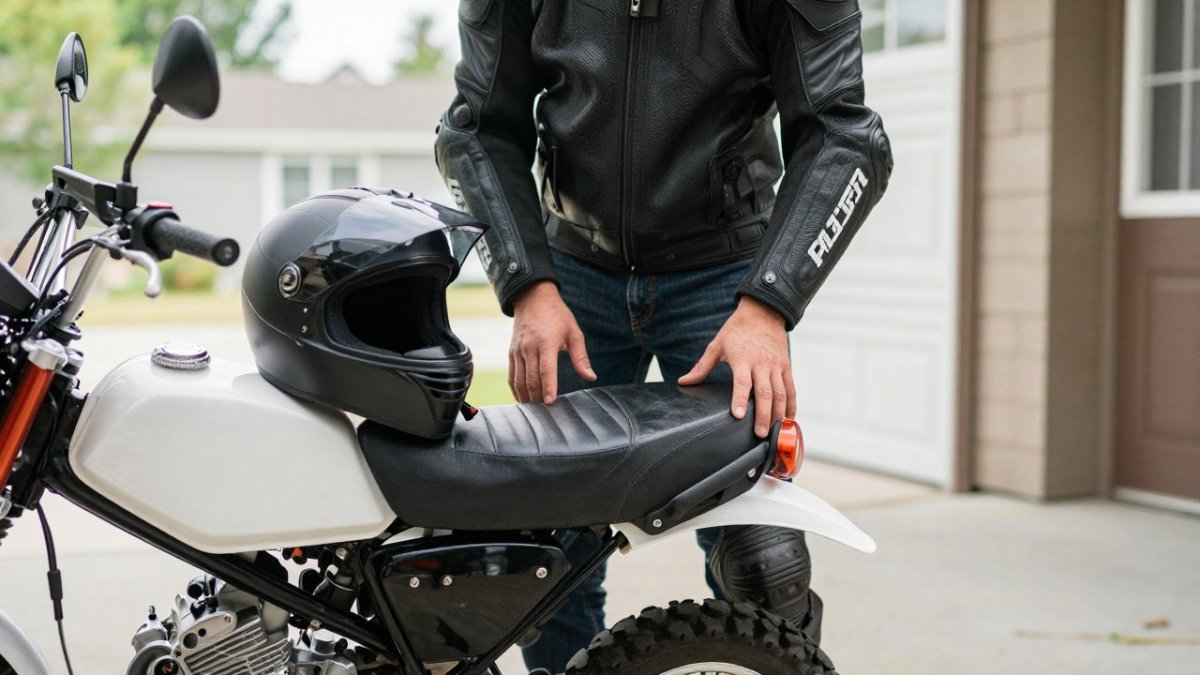
- Learning and short city trips: A 125cc to 300cc bike keeps speeds gentle and gives you room to build confidence.
- Daily commuting on mixed roads: A 300cc to 500cc bike handles city traffic and occasional highway stretches comfortably.
- Regular highway riding or longer tours: A 600cc or larger bike provides the sustained power and stability that long distances demand.
Your experience matters as much as your route. Riders who have completed formal training often progress faster and can handle more power sooner. Consider beginner safety courses, which many states offer, as part of choosing your first bike.
Watch out: buying a bike far above your skill level is the most common reason new riders lose control, so start with a size you can handle on a bad day, not a good one.
Used Motorcycle Engine Size for Beginners: Inspection and Resale Tips
Buying used can make a smaller displacement bike more affordable, but you should inspect the engine and the bike's history before committing. Check for oil leaks, unusual noises at idle, smoke from the exhaust and any signs of a dropped or crash-damaged frame.
Ask for maintenance records and confirm the bike's title is clean. Resale value also depends on the engine size and condition.
For a step-by-step approach to checking a used machine, our used motorcycle inspection checklist walks through the key items to examine before you buy.
Pick Your First Engine Size and Ask Us About Trade-Ins and Used Inventory
Choosing your first engine size comes down to your height, your riding plans and your experience, with cc as one input among several. A 300cc to 500cc bike is a practical starting point for most riders, and the right fit depends on how the bike feels to you.
At CDM Truck And Cycle Sales, we can help you talk through what suits your riding. If you are ready to buy used locally in Clute, Texas, our guide to buying used motorcycles in Clute explains the local process. If you are thinking about trading in or selling your current bike, our step-by-step guide to selling a vehicle for cash covers what to expect. Search All Vehicles to see current inventory and find your first bike.
Frequently Asked Questions
Is 750cc too big for beginners?
A 750cc motorcycle is usually considered too much bike for a true first-time rider, mainly because of weight and the amount of power available at low throttle. Many experienced riders still recommend starting in the 250cc to 500cc range, where throttle response is easier to manage and the bike is lighter to balance at low speed. A 750cc bike can work for a new rider who is tall, strong, and has completed formal safety training, but it is harder to control in parking lots and slow traffic. Test-riding the bike, checking the seat height, and asking whether you can comfortably put both feet down are better guides than the displacement number alone.
Is 600cc a beginner bike?
A 600cc motorcycle is often called a middleweight machine rather than a beginner bike. Some riders with prior experience or training handle one comfortably, but for someone with no riding history it can deliver more acceleration than they can manage smoothly. Beginners who want the 600cc class often start with a used model in good condition and take a basic rider course first. Compare seat height, curb weight, and how the throttle responds at low rpm, because those factors affect controllability more than cc alone.
Does a higher-cc motorcycle always go faster?
Not necessarily. Engine displacement is one input to performance, but top speed and acceleration also depend on horsepower, torque, gearing, weight, aerodynamics, and tuning. A lighter 400cc motorcycle can feel quicker in city traffic than a heavier 600cc model with a taller first gear. Check the manufacturer's published horsepower and weight figures on the spec sheet when comparing two bikes, since cc alone does not tell you how a bike will feel on the road.
What size motorcycle should I get for my height and weight?
Height and weight mostly determine whether a bike fits and balances under you, and that matters more for a beginner than a specific cc number. Look at seat height and whether you can flat-foot the bike or reach the ground with the balls of your feet at a stop. Heavier riders may want a motorcycle with more stable handling and adequate power for two-up or highway use, while shorter riders should prioritize low seat height and light weight. Sit on the bike before buying, and if it feels top-heavy or hard to hold upright, choose a smaller option.
Is a used motorcycle a good choice for a beginner?
A used motorcycle can be a practical first bike because it costs less upfront and a drop or scuff is less painful than damaging a new machine. Look for a well-maintained model with a documented service history, check the tires, chain or belt, brakes, and any signs of crash damage, and ask a mechanic to inspect it before you buy. Choosing a mid-size engine with good resale demand also protects your investment if you decide to trade up later.