 how-to
Buying Used Motorcycles in Clute Texas: 2026 Guide
Table of Contents
- Why Buying Used Motorcycles in Clute Texas Makes Sense
- Used Motorcycle Inventory: What to Look For
- Motorcycle Pre-Purchase Inspection Checklist
- Financing a Used Vehicle With Bad Credit in Texas
- Texas Motorcycle Title Transfer Requirements
- Insurance, Gear, and Accessories for Your Used Motorcycle
- Your First Test Ride and Dealer Visit in Clute
- Frequently Asked Questions
Last Updated: September 30, 2026
Why Buying Used Motorcycles in Clute Texas Makes Sense
A new motorcycle loses value the moment it leaves the showroom floor, which is why so many riders along the Gulf Coast choose buying used motorcycles in Clute Texas instead. You skip the steep depreciation hit, keep more cash in your pocket, and still get a machine that handles the daily commute or a weekend ride down to the coast.
Used Motorcycle Inventory: What to Look For
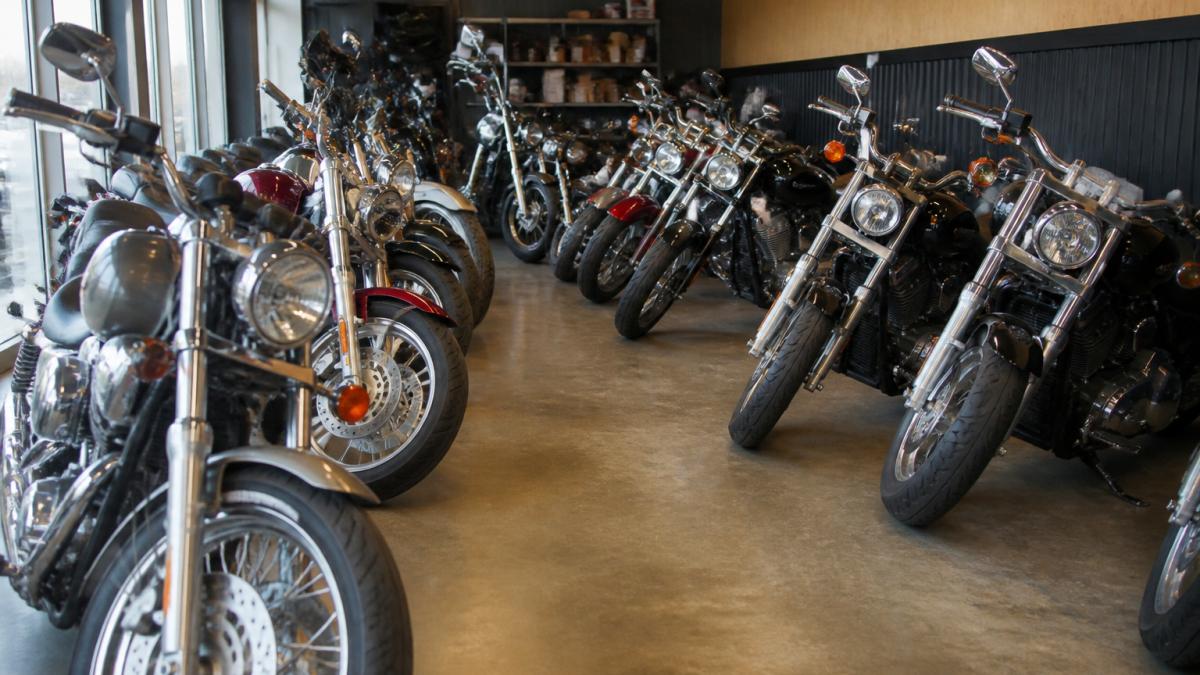
A dealership's used motorcycle inventory is where the real decision happens. Riders should focus on three things first: mileage, model year, and engine displacement.
Mileage, Model Year, and Engine Displacement
Mileage tells you how much wear the engine, chain, and brakes have absorbed. A low-mileage bike from an older model year can be a better value than a high-mileage recent one, but only if it was maintained. Engine displacement determines how the bike performs: smaller engines suit beginners and city riding, while larger displacement fits highway cruising and two-up riding.
Certified Pre-Owned vs. Private Seller
A certified pre-owned bike from a motorcycle dealership usually comes with an inspection report and sometimes a limited warranty. A private seller may offer a lower price but no protection if something fails a week later. For budget-conscious buyers who want peace of mind, certified pre-owned often wins.
| Option | Inspection | Warranty | Paperwork Help | Risk Level |
|---|---|---|---|---|
| Certified pre-owned | Dealer-performed | Often included | Full support | Lower |
| Private seller | Buyer's responsibility | Rare | Buyer handles | Higher |
| Buy-here-pay-here | Varies | Sometimes | In-house | Medium |
Motorcycle Pre-Purchase Inspection Checklist
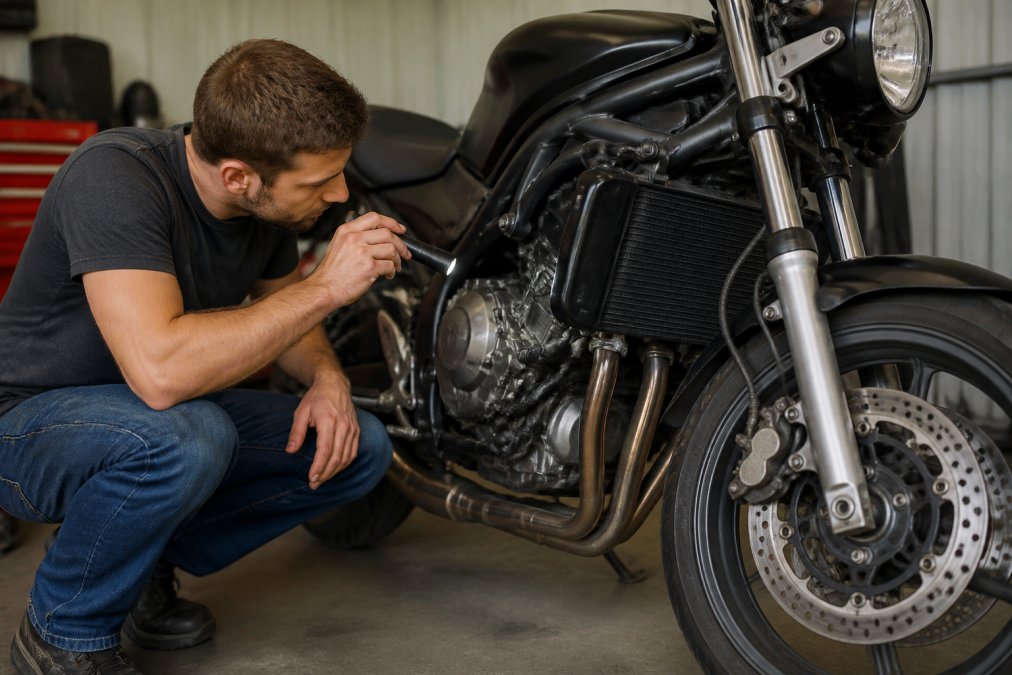
A motorcycle pre-purchase inspection checklist is the single best tool for avoiding a lemon. Walk the bike before you ever start the engine.
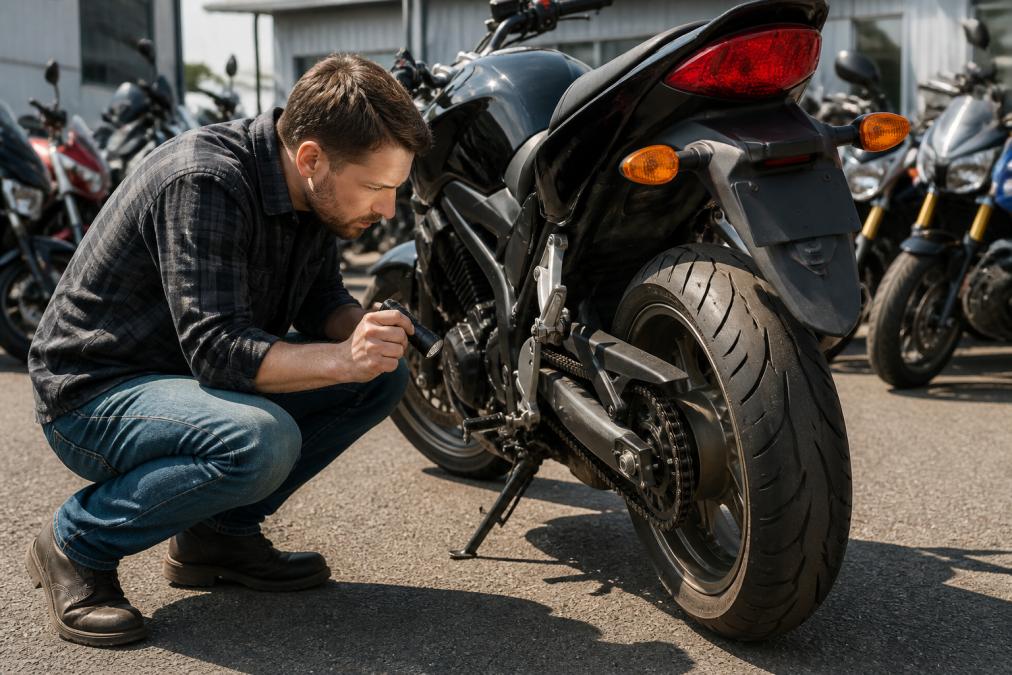
Work through these items in order:
- Tires: check tread depth and look for cracks or uneven wear
- Chain and sprockets: confirm tension and look for rust or missing teeth
- Brakes: test lever feel and inspect pad thickness, confirm ABS function if equipped
- Fluids: check oil color, coolant level, and brake fluid clarity
- Frame and forks: look for cracks, dents, or leaking fork seals
- Electrical: test lights, horn, turn signals, and instrument cluster
- VIN check: verify the VIN against the title and run a history report
- Cold start: listen for unusual noise and watch for smoke
Financing a Used Vehicle With Bad Credit in Texas
Financing a used vehicle with bad credit in Texas is possible, but the outcome depends far more on the structure of the deal than on the score itself. Lenders look at three levers you can actually pull: down payment, proof of income, and the loan-to-value ratio on the specific bike. A larger down payment reduces the lender's risk on a depreciating asset, which is why a 20% down payment can move a borderline application into an approval while a 5% down payment on the same bike gets declined.
Know Which Lender Tier You're Shopping In
Most used-motorcycle financing in this market falls into one of four buckets:
- Prime lenders (banks and credit unions): Best rates, but typically want a score in the mid-600s or higher and will finance a bike that's usually no more than a few model years old. Credit unions are often more flexible on age and mileage than banks.
- Subprime / near-prime lenders: Work with scores in the 500s and low 600s. Expect a higher APR and a shorter term. These lenders usually require proof of income and a minimum down payment.
- Buy-here-pay-here (BHPH): The dealership finances the bike in-house. Approval is based on income and down payment rather than a credit score, but the effective cost is the highest of any option. Read the contract for the total of payments, not just the monthly figure.
- Personal loans: A credit union or online lender personal loan isn't secured by the bike, so the lender doesn't care about the motorcycle's age or mileage. Rates are usually higher than a secured auto loan, but the bike stays yours outright with no lien.
The Pre-Approval Move
Get pre-approved before you shop. A pre-approval letter tells you the maximum amount, the term, and the APR you qualify for, which turns the dealership conversation from 'what monthly payment can you afford?' into 'here is my ceiling.' Bring the letter to the lot. It also protects you from a dealer running your credit through five lenders in one afternoon, which can ding your score further.
Documents to Gather Before You Apply
Have these ready so a single credit pull can produce a decision:
- Valid government-issued photo ID
- Proof of income (recent pay stubs, bank statements, or tax returns if self-employed)
- Proof of residence (utility bill or lease)
- Proof of insurance on the specific bike, or a binder from your insurer
- References and a phone number for a BHPH application
- Your down payment, in hand
Watch the Term and the Add-Ons
A longer term lowers the monthly payment but raises the total interest and can leave you owing more than the bike is worth. On a used bike, gap coverage is worth pricing because depreciation plus a high APR is exactly the scenario where a total loss leaves a balance behind. Decline add-ons you didn't ask for, extended warranties, paint protection, and tire-and-wheel packages are negotiable and should be priced separately, not bundled into the loan without a line-item breakdown.
If You're Declined
A decline is not the end of the process. A larger down payment, a co-signer with stronger credit, or a less expensive bike can change the answer. Some buyers also improve their position by paying down a revolving balance a month or two before applying, which can lift a score enough to cross a lender's cutoff.
Texas Motorcycle Title Transfer Requirements
Texas motorcycle title transfer requirements are more specific than most buyers expect, and getting the sequence wrong is the most common reason a registration gets delayed. The state's process runs through the county tax assessor-collector's office, not the DMV, and the clock starts the day you buy.
What the Seller Must Hand You
- The original Texas title, signed and dated by every owner listed on the front
- The seller's signature in the buyer section, with your name and address filled in exactly as they appear on your ID
- A completed Form 130-U (Application for Texas Title and/or Registration), signed by both parties
- A bill of sale showing the date, sale price, VIN, and both parties' names, this protects you if the county questions the stated value
- The current registration receipt, if the seller has it, which helps confirm the bike isn't flagged
- A release of lien, if the title shows an active lienholder
The 30-Day Rule and the Notice of Transfer
The buyer must apply for title and registration within 30 days of the sale date (Buying or Selling a Vehicle). Miss that window and the county can assess penalties when you finally file. Separately, the seller is required to file a Motor Vehicle Transfer Notification (Form VTR-346) with the state. That form removes the seller's liability for tickets and tolls the buyer racks up after the sale.
What Happens at the County Tax Office
Bring the signed title, Form 130-U, bill of sale, proof of insurance, your photo ID, and payment for the fees. The clerk will:
- Verify the VIN against the title and the physical bike (some counties require a VIN inspection, especially on out-of-state titles)
- Collect the 6.25% motor vehicle sales tax on the purchase price or the county's standard presumptive value, whichever is higher
- Issue a new title in your name and a registration sticker
Fees You Should Budget For
Title and registration fees in Texas are modest but not zero. Expect a title application fee, a registration fee based on the bike's weight class, a local county fee, and the sales tax. Because the exact figures change and vary by county, pull the current fee schedule from the Texas DMV title and registration guidance before your appointment, and call the county tax office to confirm which forms they want in hand.
Red Flags That Stop a Transfer Cold
- A title with a 'bonded' or 'salvage' brand, the bike may need a rebuilt-title inspection before it can be registered
- A missing signature from a co-owner listed on the title
- A VIN mismatch between the frame, the engine, and the title
- An open lien with no release document
- A seller who wants to 'skip the title' and hand you a bill of sale only, that bike cannot be legally registered in Texas
Insurance, Gear, and Accessories for Your Used Motorcycle
Insurance for a used motorcycle usually costs less than coverage for a new one because the payout value is lower. Still, full coverage matters if you financed the bike, since the lender requires it. Ask your insurer how they handle older bikes and whether they offer discounts for a motorcycle safety course.
Your First Test Ride and Dealer Visit in Clute
A test ride confirms everything the inspection suggested. Check that the bike starts cold, shifts smoothly through the gears, and brakes without pulling. Listen for rattles and watch the gauges. If a dealer won't allow a test ride, that's a red flag.
Frequently Asked Questions
What documents are required to transfer a motorcycle title in Texas?
To transfer a motorcycle title in Texas, you need the signed original title from the seller, a completed Title Transfer form (Form 130-U), a signed bill of sale, and proof of insurance. If the title was issued out of state, a VIN inspection may also be required. Both buyer and seller should keep copies of all paperwork. Visit your county tax office within 30 days of the sale to complete the transfer and pay applicable fees.
How can I verify the history of a used motorcycle before buying?
Run a VIN check through a service like NMVTIS or a private history report to see accident records, salvage titles, and theft history. Ask the seller for maintenance records and a current inspection report. A certified pre-owned motorcycle from a dealership typically comes with a documented inspection and warranty. Always compare the VIN on the frame to the one on the title before handing over any money.
Do I have to pay sales tax on a used motorcycle in Texas?
Yes. Texas charges a 6.25% motor vehicle sales tax on used motorcycle purchases, plus any local taxes. The tax is based on the purchase price or the standard presumptive value, whichever is higher. You pay this when you transfer the title at your county tax office. If you buy from a Texas dealer, they usually collect it for you. Private sales require you to handle it yourself.
What should I look for during a pre-purchase motorcycle inspection?
Check the tires for tread depth and cracking, test the brakes and ABS if equipped, inspect the chain or belt for wear, and look for fluid leaks under the engine. Start the bike cold to hear how it idles, check all lights and signals, and verify the mileage matches the title. Ask for a cold-start test ride. A pre-purchase inspection checklist helps you stay systematic so you do not miss anything important.
Shopping for a used motorcycle near the coast doesn't have to mean hidden fees or surprise repairs. At CDM Truck And Cycle Sales, we offer a stress-free vehicle buying experience, high-quality bikes at affordable prices, and a network that can track down the exact model you want. Bring your trade-in for a fair offer, even if you don't buy from us, and let our team simplify the process from inspection to title. Search all vehicles with CDM Truck And Cycle Sales and ride away with confidence.