 how-to
How to Sell a Vehicle for Cash: A 2026 Step-by-Step Guide
Table of Contents
- What You'll Need Before You Sell Your Vehicle for Cash
- How to Prepare Your Car for Sale
- Private Party vs Dealership Sale: Which Gets You More Cash?
- How to Get a Fair Market Value Estimate
- The Vehicle Bill of Sale Template and Title Transfer Process
- Selling a Car with Mechanical Issues or on Behalf of a Deceased Relative
- Tax, Insurance, and Registration: What to Handle After the Sale
- Common Mistakes to Avoid When You Sell a Vehicle for Cash
- Frequently Asked Questions
Last Updated: September 25, 2026
What You'll Need Before You Sell Your Vehicle for Cash
When you sell vehicle for cash, the process starts with paperwork, not pricing. The average private-party transaction takes one to three weeks, mostly because sellers gather documents late.
Here's what to collect before you list the car:
- Certificate of title (the original, not a copy)
- Government-issued photo ID matching the name on the title
- Current registration and proof of insurance
- Loan payoff statement if a lender holds the title
- Odometer disclosure statement for vehicles under 10 years old
- Maintenance records and any warranty paperwork
Documents to Gather
The title is the single most important document. A vehicle title proves legal ownership and allows the transfer to a new buyer; without it, you cannot complete a legal sale in most states. Two other papers matter just as much: a bill of sale records the date, price, and both parties' names, and a vehicle history report reassures buyers and speeds up negotiations.
How to Prepare Your Car for Sale
Clean cars sell faster and for more money. A $50 detailing job can add hundreds to your final offer, because buyers judge condition within seconds.
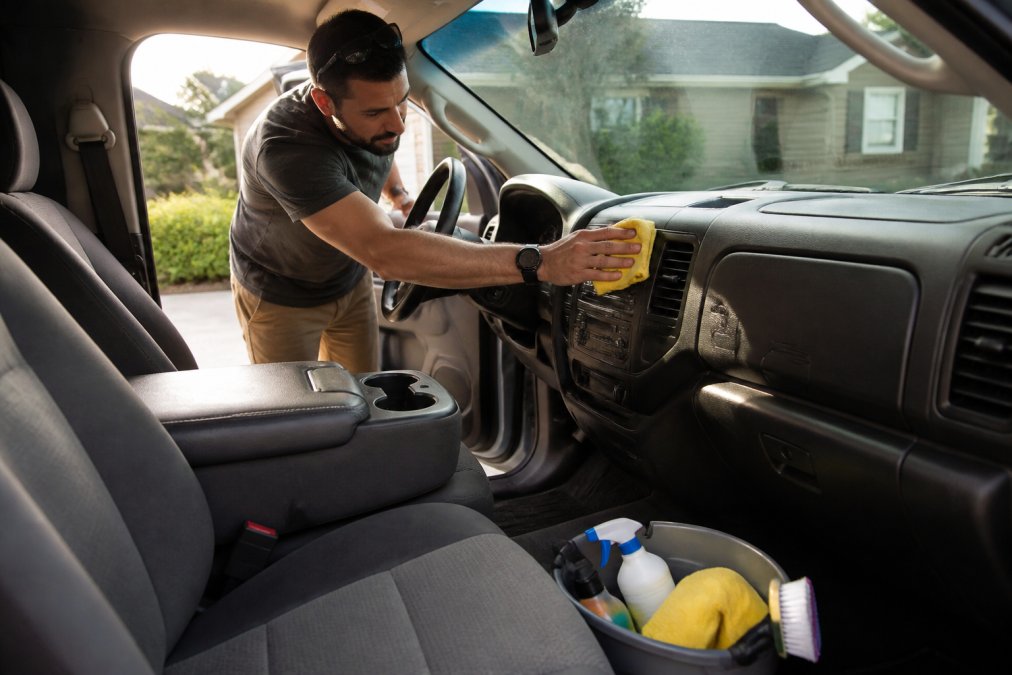
Start with the basics:
- Wash and wax the exterior, including the wheel wells
- Vacuum and wipe down the interior
- Remove personal items, trash, and strong odors
- Replace burnt-out bulbs and worn wiper blades
- Top off fluids before any test drive
Cleaning and Minor Repairs That Pay Off
Focus your money where buyers look first: the driver's seat, dashboard, and front grille.
Private Party vs Dealership Sale: Which Gets You More Cash?
A private party sale usually nets more money; a dealership sale closes faster with less hassle. Private buyers pay closer to retail because they skip the dealer markup, but you handle strangers, test drives, payment risk, and paperwork yourself. Dealerships offer less, but they handle the title work, pay you immediately, and take the car off your hands the same day.
| Factor | Private Party Sale | Dealership Sale |
|---|---|---|
| Typical payout | Higher | Lower but instant |
| Time to close | Days to weeks | Same day |
| Paperwork | You handle it | Dealer handles it |
| Payment risk | Higher | None |
| Best for | Patient sellers | Fast, low-stress sales |
Instant Cash Offer vs Private Sale
An instant cash offer is a firm price a dealer gives you after a quick inspection, often within minutes, you trade a bit of money for speed and certainty. A private sale takes longer but often pays more, especially for in-demand vehicles like a clean pickup or low-mileage SUV.
How to Get a Fair Market Value Estimate
A fair market value estimate is what a willing buyer would pay a willing seller in your local market right now. Getting it right keeps you from pricing too high or leaving money on the table.
Use three sources to build your range:
- Online valuation tools that pull recent local sales
- Classified listings for the same make, model, and mileage
- A written offer from a local dealership
The Vehicle Bill of Sale Template and Title Transfer Process
Here's a simple template you can copy:
VEHICLE BILL OF SALE Seller name: ______________________ Buyer name: ______________________ Vehicle year/make/model: ______________________ Vehicle identification number (VIN): ______________________ Odometer reading: ______________________ Sale price: $______________________ Date of sale: ______________________ "I certify the above information is true and the vehicle is sold as-is." Seller signature: ______________________ Buyer signature: ______________________
Understanding the Title Transfer Process
The title transfer legally moves ownership from you to the buyer. Rules vary by state, so check your local motor vehicle office before the sale.
In most cases, you will:
- Sign the back of the title in the seller's section
- Fill in the buyer's name and the sale date
- Note the odometer reading if required
- Hand the signed title to the buyer
- Submit a notice of sale to your state, if required
Selling a Car with Mechanical Issues or on Behalf of a Deceased Relative
These two scenarios require a different playbook than a clean private-party sale, both are legal and both can produce cash quickly.
Selling a Vehicle with Mechanical Problems
You are not required to fix anything before selling, but in nearly every state you must disclose known defects honestly. The principle is as-is sale with disclosure: the buyer accepts the vehicle as-is, but you cannot lie about what you know. Disclose in writing on the bill of sale:
- Engine, transmission, or drivetrain problems you are aware of
- Warning lights that are on or that have been disabled
- Frame damage, flood history, or prior salvage branding
- Odometer discrepancies or a broken odometer
- Emissions or safety inspection failures
Who buys cars with problems:
- Independent dealers and trade-in desks, who can repair at cost
- Mechanics and hobbyists looking for a project
- Salvage and parts buyers, for vehicles with major damage
- Online instant-offer platforms, which will quote low but pay fast and handle the paperwork
Selling a Car on Behalf of a Deceased Relative
This is an estate transaction; the paperwork depends on whether the estate went through probate.
- Letters testamentary or letters of administration from the court
- The original title, signed by the personal representative in the estate's capacity
- A certified copy of the death certificate
- Estate documentation showing authority to sell
Practical notes for estate sales:
- Price the car using the same fair-market-value method as any other sale. Sentiment does not change what the market pays.
- Clean the car out completely. Personal items, registration, insurance cards, and garage door openers should not go to the buyer.
- Keep a copy of every document you sign. Estate sales are sometimes challenged by other heirs, and your paper trail is your protection.
- If multiple heirs are involved, get written agreement on the sale price before you list the car.
Tax, Insurance, and Registration: What to Handle After the Sale
Most guides stop the moment cash changes hands, but the paperwork that follows is where sellers get burned, a liability gap, a surprise tax bill, or a registration that keeps renewing on a car you no longer own. Here is how to close out the transaction cleanly.
Is the Sale Taxable?
For most private-party sellers, no at the federal level. The IRS treats a personal vehicle sold at a loss as non-taxable, because you are selling personal-use property, not inventory. A capital gain is reportable only when you sell for more than your cost basis, original purchase price plus major improvements, minus depreciation claimed. That is rare for daily drivers but common for collector cars and restored classics.
Canceling Insurance Without Creating a Liability Gap
This is the most expensive mistake sellers make. Cancel coverage the day you hand over the keys and the buyer drives uninsured, and you can still be named in a claim in some states because the vehicle was titled to you at the time of the incident. The safer sequence:
- Keep the vehicle on your policy until the title transfer is recorded. In many states, the date the buyer registers the car, not the date of the handshake, is what ends your exposure.
- Notify your insurer in writing the day after the sale, with the buyer's name, the sale date, and the odometer reading.
- Ask for a cancellation confirmation letter and keep it with your bill of sale. If a claim surfaces later, that letter is your proof of when coverage ended.
- Do not cancel before you have the signed title and a copy of the buyer's ID. If the deal falls apart, you will be re-insuring a car with a lapse on its record.
License Plates and Registration
Plate rules vary widely, and getting this wrong can mean toll violations, parking tickets, or registration renewals landing in your mailbox months later.
- Transfer-the-plates states: You keep your plates and move them to your next vehicle. The buyer registers with new plates.
- Leave-the-plates states: The plates stay with the car and transfer to the buyer at registration.
- Turn-in states: You must surrender the plates to the motor vehicle agency and get a receipt.
What to Keep in Your Files
After the sale, keep copies of the signed title, bill of sale, odometer disclosure, notice of sale confirmation, and insurance cancellation letter. Toll violations and parking tickets commonly arrive four to six weeks later, with those documents, one phone call clears it; without them, you may pay a fine for a car you no longer own.
Common Mistakes to Avoid When You Sell a Vehicle for Cash
Most bad sales come down to a few repeat mistakes when you sell vehicle for cash. Avoiding them protects your money and time.
- Skipping the lien payoff. If a lender holds the title, you cannot hand over clean ownership until it's paid.
- Accepting unverified payment. Fake checks and payment apps with no protection are common.
- Leaving the title blank. An open title invites curbstoning and creates legal risk for you.
- Forgetting to cancel insurance. You keep paying for a car you no longer own.
- Pricing on emotion. Sentiment does not change depreciation or what the market will pay.
- Ignoring negative equity. If you owe more than the car is worth, you will need to cover the gap.
Frequently Asked Questions
Who gives you the most money for selling your car?
Private party sales typically bring the highest price because you're selling directly to the next owner with no dealer markup. Dealerships offer less but pay instantly and handle all paperwork. For a fast, hassle-free sale, an instant cash offer from a dealership is often the best balance of speed and fair value. Get quotes from multiple sources before deciding.
What paperwork is required to sell a car privately for cash?
You'll need the vehicle title, a signed bill of sale, and a release of lien if the car has a loan. Also provide the odometer reading and any service records you have. Check your state's rules on title transfer and whether the buyer must sign the title in front of a notary. Keep a copy of every document for your records.
How do I ensure a safe cash transaction when selling a vehicle?
Meet the buyer at a bank or police station, verify funds with a cashier's check or direct deposit, and complete the title transfer on the spot. Never hand over the keys or title until payment clears. If accepting cash, count it in a secure location and consider a bill of sale signed by both parties to document the sale.
What is the $3000 rule for cars?
The $3000 rule is a general guideline suggesting that cars priced under $3,000 often need significant repairs, so buyers should budget extra for maintenance. For sellers, it means a vehicle in that price range may sell faster to a dealership or trade-in program than through a private party sale, since buyers at that price point are often more cautious about condition and paperwork.
Selling a vehicle for cash takes planning, but the payoff is real: more money in your pocket and a clean, legal transfer. If the process feels like too much work, CDM Truck And Cycle Sales makes it simple. We will buy your trade-in even if you don't buy from us, and our team handles the title work, payment, and paperwork for you. Stop by our Clute showroom or search all vehicles online to get a fair cash offer today.