 How-to
7 Steps to Trade In a Used Motorcycle for Cash
Last Updated: November 22, 2026
Quick Summary
You can trade in motorcycle for cash in a single visit when your paperwork is ready: request a free quote, bring the bike, title, and ID for inspection, then accept a no-obligation cash offer. A dealer offer typically runs 10 to 20 percent below a private-sale asking price, which reflects reconditioning and resale margin.
- Clean the bike and gather your title, ID, and service records before anyone appraises it.
- A dealer trade-in pays same day and removes payment risk, while a private sale may bring a higher price.
- Ask for the offer breakdown: base market value, repair deductions, and adjustments for title status or mileage.
- Negotiate specific deductions like worn tires or a chain, since recent maintenance receipts can recover part of them.
- Verify funds before releasing the bike or title, because a cashier's check can be counterfeit.
Table of Contents
- How much cash can you get for a used motorcycle?
- How to get the best cash offer for a motorcycle
- Trade in motorcycle vs. sell privately: which pays more?
- What documents do I need to sell a motorcycle?
- Can you sell a motorcycle without a title?
- Step-by-step: from free quote to cash in hand
- Get your used motorcycle appraised at CDM Truck And Cycle Sales
- Frequently Asked Questions
How much cash can you get for a used motorcycle?
The cash you can get when you trade in motorcycle depends on its make and model, model year, mileage, condition, and the local market for that bike. A dealer cash offer reflects what the bike can realistically resell for, minus reconditioning and margin. That means two identical models can produce very different offers.
A clean, low-mileage cruiser with service records will generally be valued higher than a project bike with a salvage history, even if both are the same year.
Here is what moves a motorcycle valuation up or down:
- Make and model: popular models with strong parts availability hold value better
- Mileage: lower mileage helps, but a well-maintained high-mileage bike still has a market
- Condition: tires, chain or belt, brakes, paint, and seat wear all get inspected
- Title status: a clean title in your name is worth more than a bonded or rebuilt title
- Accessories: hard bags, windscreens, and factory options add modest value; aftermarket mods rarely do
The honest answer is that no one can quote a real number without seeing the bike. Any offer made sight unseen is a guess, and you should treat it that way.
How to get the best cash offer for a motorcycle
Getting the best cash offer for a motorcycle starts with preparation, not negotiation. Sellers who arrive with a clean bike, a clear title, and honest answers about its history consistently get stronger numbers than sellers who wing it.
Clean the bike before anyone looks at it. Wash it, degrease the chain area, and wipe down the wheels. A clean motorcycle reads as a cared-for motorcycle, and that impression shapes the offer.
Then gather your paperwork. Have the title, your ID, and any service records ready. If there is an outstanding loan, bring the payoff paperwork too. Our guide on how to get fair trade-in value walks through the full preparation process if you want more detail.
A common mistake is hiding known problems. A dealer will find them during inspection anyway, and a surprise defect damages trust more than a disclosed one. Tell the appraiser about the leak, the noisy bearing, or the cracked mirror up front.
Trade in motorcycle vs. sell privately: which pays more?
A private sale usually brings a higher headline price, but a dealer trade-in pays faster and removes the risk. That is the real trade-off, and it is the one most sellers get wrong when they compare the two.
Private sales mean advertising, phone calls, no-shows, test rides, and tire-kickers. You also carry the risk of a bad payment, a bounced check, or a buyer who returns weeks later with complaints. A dealer trade-in skips all of that. You get a same-day offer, a signed title transfer, and cash or a check in hand.
If you want the full walkthrough of the private-sale process, our guide on how to sell a vehicle for cash covers it step by step. Compare that effort against a no-obligation dealer offer before you decide.
| Factor | Dealer trade-in | Private sale |
|---|---|---|
| Speed | Same day | Days to weeks |
| Effort | One visit | Ads, calls, showings |
| Payment risk | Low | Buyer-dependent |
| Paperwork | Dealer handles transfer | Seller handles transfer |
| Price | Slightly lower | Potentially higher |
What documents do I need to sell a motorcycle?
You need the certificate of title, a valid government-issued photo ID, and, if the bike is financed, the payoff paperwork from your lender.
Here is the standard document checklist for a motorcycle sale:
- Certificate of title, signed and in your name
- Government-issued photo ID
- Bill of sale, if your state requires one
- Odometer disclosure statement, if required
- Lien release or payoff statement, if financed
- Service and repair records, if available
- Any transfer or release forms from your state agency
That checklist covers the easy case: a clean title in your name, no loan, and a buyer standing in front of you.
Clean title in your hand, no lien. This is the fastest path.
Financed motorcycle with an outstanding loan. The lender holds the title, so you cannot sign it over until the loan is satisfied.
Lost or missing title. Apply for a duplicate title through your state motor vehicle agency before you sell.
Title in a previous owner's name. This is the classic "title jumping" problem.
Out-of-state title or sale. If the title was issued by another state, confirm your state accepts it and whether an out-of-state inspection is required.
The Texas Department of Motor Vehicles publishes the current title transfer and odometer disclosure requirements for this state. Rules change, so check the official page rather than relying on a forum post.
Can you sell a motorcycle without a title?
Selling a motorcycle without a title is possible in some situations, but it is harder and the offer will be lower. Buyers and dealers need a clean title to legally transfer ownership, so a missing title becomes a paperwork problem that someone has to solve.
Common situations and what they mean:
- Title lost: you can usually request a duplicate title from your state motor vehicle agency
- Title in a previous owner's name: you may need a bonded title or a court process, depending on state law
- Outstanding loan: the lender holds the title until the loan is paid off
- Parts bike or project bike: a bike without a title is often bought for parts, and priced accordingly
A common approach for a lost title is to apply for a duplicate before selling. It takes time, but it protects the sale price. If the bike genuinely cannot be titled, be upfront with the buyer or dealer. A state motor vehicle agency can confirm the duplicate title process for your situation.
Step-by-step: from free quote to cash in hand
The process runs from a free quote to cash in hand in a single visit when your paperwork is ready.
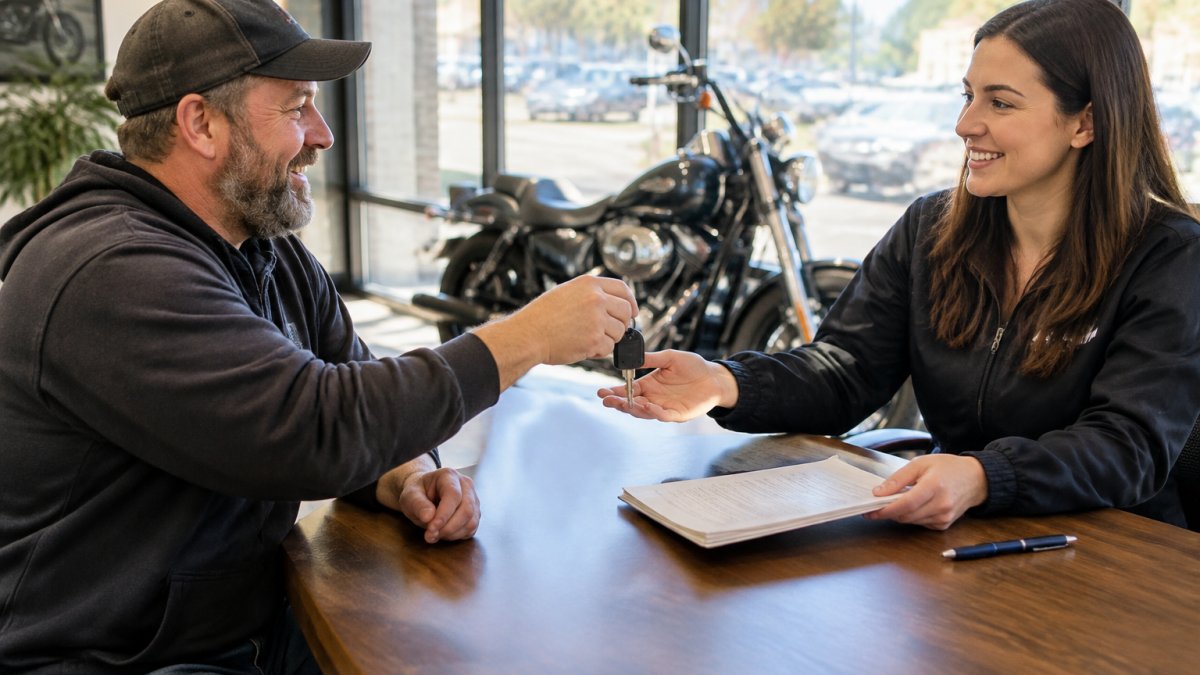
- Request a free quote. Call or stop in and describe the bike: make, model, year, mileage, and condition. Be specific about modifications, known issues, and title status. A quote based on an accurate description is closer to the final offer than one built on a hopeful summary.
- Bring the bike and paperwork. Ride it in with the title, your ID, and any payoff paperwork. If the bike is not rideable, ask whether pickup is available before you arrange a trailer.
- Vehicle inspection. We check the engine, tires, brakes, frame, and electrics, and verify the VIN against the title. Expect the appraiser to note tire tread depth, chain or belt wear, brake pad thickness, fork seals, and any warning lights. These are the items that drive reconditioning cost and, in turn, the offer.
- Receive your offer. You get a no-obligation cash offer based on the inspection and current market value. Ask for the breakdown: base market value, deductions for needed repairs or tires, and any adjustment for title status or mileage. A dealer who cannot explain the number is a dealer worth walking away from.
- Evaluate the offer against independent numbers. Before you accept, compare the offer to private-party listings for the same make, model, and year in similar condition. A common pattern is a dealer offer 10 to 20 percent below a private-sale asking price, which reflects the dealer's reconditioning and resale margin. That gap is the price of speed and convenience, not a sign you are being cheated.
- Negotiate the deductions, not the whole number. If the appraiser flags tires or a chain as worn, ask what the deduction is and whether fresh tires or a recent service record would change it. Sellers who bring receipts for recent maintenance often recover part of the deduction. Negotiation works best on specific line items, not on a vague request for "a little more."
- Accept or walk away. There is no pressure. If the number works, we move to paperwork. If it does not, you have lost nothing but time and you have a baseline to compare against other offers.
- Sign the title transfer. We complete the title and payoff paperwork together. Confirm the VIN, odometer reading, and buyer name match the title before anyone signs.
- Get paid, and verify the payment. Payment timing depends on title status; a clean title in hand can often be settled the same day. If you are paid by check, ask whether it is a dealer draft or a personal check, and confirm funds before you hand over the keys. Cash is simplest, but count it at the desk rather than in the parking lot.
Watch out: A cashier's check can be counterfeit, and a bank may hold funds for days before the fraud surfaces. If a private buyer insists on a check, meet at the buyer's bank and complete the transaction inside the branch, or use a verified instant payment method.
Watch out: For private meetups, choose a public location during daylight, bring a friend, and do not share your home address or the bike's VIN in public listings. A VIN is enough for a scammer to clone a listing, and a home address invites theft.
If you are still deciding what to ride next, browse used motorcycles in Clute Texas while you are here.
Get your used motorcycle appraised at CDM Truck And Cycle Sales
We will buy your trade-in even if you don't buy from us. That is the part most sellers do not expect, and it is the reason a visit costs you nothing but time.
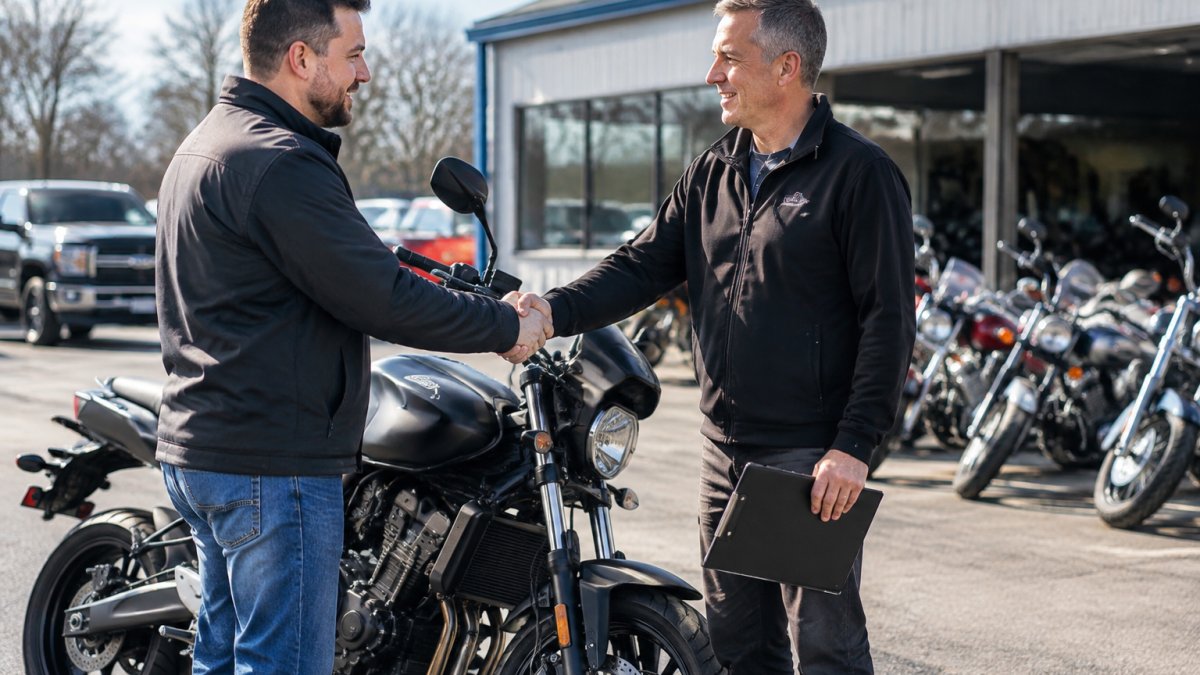
Bring your bike to our Clute showroom and we will inspect it, explain how we arrived at the number, and make a no-obligation cash offer. If you are also shopping, our industry network helps us source the specific truck or motorcycle you want when it is not on the lot.
A fair price and a straightforward process are the whole point. We would rather earn your trust on a trade-in than talk you into a deal that does not fit.
Ready to find out what your bike is worth? Bring it by CDM Truck And Cycle Sales for a free appraisal, get a no-obligation cash offer, and let our team handle the title paperwork while you browse the inventory. Get started with CDM Truck And Cycle Sales and turn your used motorcycle into cash without the hassle.
Frequently Asked Questions
Who will give me the most money for my motorcycle?
The highest offer usually comes from whoever has the easiest path to reselling your bike. A local dealer that retails motorcycles can sometimes be a practical option because it avoids transport and auction fees. Get at least two written offers, one from a dealer and one from a private buyer, and compare the net number after any fees, not the headline figure.
How long does it take to trade in a motorcycle for cash?
Appraisal timing depends on the bike and the paperwork. Deals involving an outstanding loan generally take longer because the lender has to issue a payoff statement and release the lien.
Can I trade in a motorcycle that still has a loan on it?
Yes. Lender payoff is handled as part of the paperwork, and the arrangement depends on how the offer compares to the payoff amount. Bring the lender's name, account number, and payoff quote so the paperwork does not stall.
What if my motorcycle is damaged or not running?
Damaged, non-running, and older bikes still have value, though the offer reflects repair cost and parts demand. Clean the bike, gather service records, and disclose known issues up front. A project bike or parts bike will generally not fetch retail money.