 How-to
How to Get Fair Trade-In Value: 2026 Guide
Table of Contents
- Step 1: Know Your Vehicle's Fair Market Value Before You Talk to Anyone
- How to Prepare Your Car for Trade-In and Boost Its Curb Appeal
- Used Car Appraisal Tools: Which Ones Give Accurate Numbers
- How to Negotiate Car Trade-In Offers Like a Pro
- Understanding Dealer Profit Margins and Your Negotiation Use
- The Tax Advantage of Trading In vs. Selling Privately
- Managing Negative Equity and Post-Pandemic Market Adjustments
- Conclusion: Your Action Plan for a Fair Trade-In Offer
- Frequently Asked Questions
Last Updated: September 30, 2026
Step 1: Know Your Vehicle's Fair Market Value Before You Talk to Anyone
Getting a fair trade-in value starts with knowing what your vehicle is actually worth before a dealer makes an offer. Most sellers walk onto a lot with a number in their head that comes from a friend's guess or a single online estimate. That is a mistake.
Fair market value is the price a ready buyer would pay for your exact vehicle, in its exact condition, in your local market. It sits between wholesale value, what a dealer pays at auction, and retail value, what that dealer then sells the car for.
Gather three numbers before you negotiate: a private party sale estimate, a dealer retail estimate, and a wholesale or auction estimate. The gap between them is where your fair trade-in value lives.
Gather Your Documentation: VIN, Service Records, and a Clean Title
Paperwork is use. A dealer who sees a complete file treats you as a serious seller.
Pull these items together:
- Your vehicle identification number (VIN), found on the dashboard or driver's door jamb
- A clean title in your name, with no liens
- Service records showing oil changes, tire rotations, and major repairs
- The current odometer reading, photographed for your records
- A recent vehicle history report from a provider like Carfax or AutoCheck
A clean title and a stack of receipts do two things at once. They raise your car's resale value in the appraiser's eyes, and they remove any excuse to knock money off the offer.
How to Prepare Your Car for Trade-In and Boost Its Curb Appeal
Clean cars appraise higher. That sounds obvious, but most sellers skip it. A proper wash, wax, and interior detail can shift the offer more than any single repair.
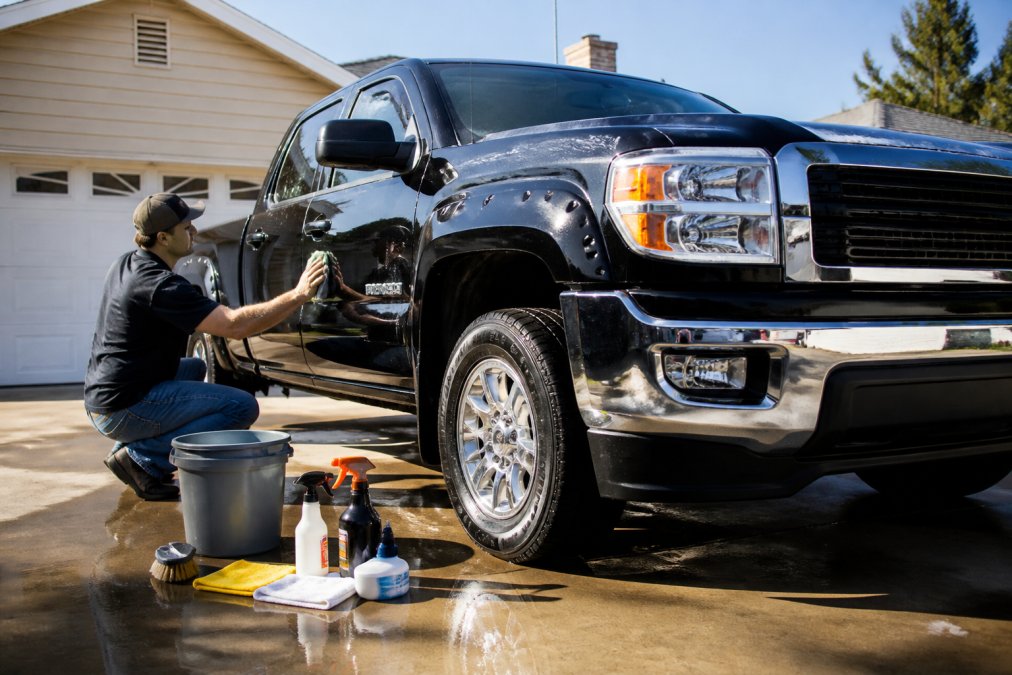
Spend a weekend on curb appeal before your vehicle inspection. Wash the exterior, clean the wheels, vacuum the interior, and wipe down the dashboard. Fix small things: burned-out bulbs, a missing floor mat, a cracked mirror cap.
What to Fix and What to Skip Before Your Vehicle Inspection
Not every repair pays you back. Dealers subtract reconditioning costs from your offer, so fix what a buyer will notice and skip what only a mechanic would.
| Fix This | Skip This | Why |
|---|---|---|
| Burned-out bulbs | Engine rebuilds | Cheap fix, high visibility |
| Windshield chips | Transmission work | Safety item, low cost |
| Worn wiper blades | Paint respray | Quick swap, clear signal |
| Dirty interior | Major body work | Detail cost beats repair cost |
| Low fluids | Suspension overhaul | Topping off is nearly free |
Used Car Appraisal Tools: Which Ones Give Accurate Numbers
No single valuation tool gives a perfect number, so use two or three and average the results. Free online estimators from Kelley Blue Book, Edmunds, and NADA Guides are a solid starting point. Each pulls from auction data, regional sales, and dealer listings.
Here is how to get the most from them:
- Enter your VIN, not just the make and model
- Answer condition questions honestly, not optimistically
- Select the "trade-in" value, not the private party number
- Run the estimate twice, once as "good" condition and once as "fair"
How to Negotiate Car Trade-In Offers Like a Pro
Negotiation starts before you sit down. Separate the trade-in deal from the purchase deal, and never let a dealer bundle them into one monthly payment.
Do this instead:
- Get your trade-in offer in writing first
- Negotiate the new vehicle price second
- Discuss financing last, with a pre-approved loan in hand
Negotiation Scripts: What to Say When the Offer Is Low
Use these lines when the number comes in under your target.
Understanding Dealer Profit Margins and Your Negotiation Use
Dealers make money two ways on a trade: they buy your car below retail, then sell it at retail. That spread, minus reconditioning costs, is the dealer profit margin.
Ask two questions:
- What is your current dealer inventory looking like for this model?
- How long do vehicles like mine sit on your lot?
The Tax Advantage of Trading In vs. Selling Privately
In most states, a trade-in reduces the sales tax you owe on the new vehicle. This is called a sales tax offset (sometimes written as a trade-in tax credit), and it is the single biggest reason a lower trade-in offer can still be the better deal. Most guides skip this calculation entirely, which is why sellers routinely leave hundreds of dollars on the table by chasing the higher private-party number.
The Break-Even Formula You Can Run in Two Minutes
Do not eyeball this. Run the numbers before you decide between a trade-in and a private sale.
- Write down your best private-party offer (call it P).
- Write down your best dealer trade-in offer (call it T).
- Multiply your new vehicle's price by your local sales tax rate to get the tax you would owe on a full-price purchase (call it F).
- Multiply (new vehicle price minus T) by the same rate to get the tax you owe with the offset (call it O).
- Your trade-in's true value is T + (F − O). Compare that to P.
Where the Offset Does Not Apply
A handful of states do not offer a trade-in tax credit at all, and a few cap the credit or limit it to vehicles bought from a licensed dealer. Some states also require the trade-in and the new purchase to happen in the same transaction, which rules out selling privately and buying later. Before you assume the offset applies, check your state department of revenue's page on sales and use tax for motor vehicles.
Two more wrinkles that trip people up:
- Lease buyouts and payoff timing. If you still owe on the trade-in, the dealer pays off the lien first. The offset is typically calculated on the gross trade-in value, not the equity you walk away with, but confirm this with the dealer's finance office in writing.
- Private-sale paperwork. In states that do offer the offset, you usually need the dealer to show the trade-in on the same bill of sale as the new vehicle. A private sale cannot generate that document, which is the whole reason the offset exists.
State motor vehicle sales tax and trade-in credit rules
Managing Negative Equity and Post-Pandemic Market Adjustments
Negative equity means you owe more on your loan than the car is worth. It is common, and it changes your whole approach.
What you can still control:
- Your car's condition
- Your documentation
- Your competing offers
- Your timing, since tax season and spring often bring stronger demand
Conclusion: Your Action Plan for a Fair Trade-In Offer
Getting a fair trade-in value is not luck. It is preparation, paperwork, and a willingness to walk away from a low number.
Frequently Asked Questions
What is the $3,000 rule for cars?
The $3,000 rule is a general guideline suggesting that if a vehicle's repair costs exceed $3,000, it may not be worth fixing for trade-in purposes. This threshold helps owners decide whether to invest in repairs or accept a lower offer. However, the actual math depends on your car's fair market value, the specific repairs needed, and what a dealer would deduct for those same issues during appraisal. A $3,000 repair on a vehicle worth $15,000 is very different from one on a car worth $4,000.
How do dealerships calculate trade-in value?
Dealers start with the wholesale value, which is what your car would fetch at auction. They then subtract reconditioning costs for any needed repairs, cleaning, or tire replacement. The remaining figure becomes your trade-in credit. Factors like odometer reading, vehicle condition report, service records, and current dealer inventory levels all influence the final number. Understanding this process gives you negotiation leverage because you can question inflated reconditioning deductions or point to comparable auction values.
Is it better to sell privately or trade in at a dealership?
Private party sales typically net 10-15% more than trade-in offers because you skip the dealer's profit margin. However, trading in offers convenience, immediate payment, and in most states a sales tax offset on your new vehicle purchase. If you trade in a $10,000 car and buy a $30,000 vehicle with a 6% sales tax rate, you save $600 in taxes. For many buyers, that tax advantage plus the time saved makes trade-in the smarter financial move, especially on higher-priced vehicles.
How can I prepare my car to get the highest trade-in offer?
Start by gathering all service records, your clean title, and verifying the odometer reading. Wash and detail the interior and exterior to improve curb appeal. Fix small issues like burnt-out bulbs, worn wiper blades, or low fluids, but skip major repairs unless they affect safety. Get a vehicle history report to confirm no errors. Finally, obtain at least two independent appraisals before visiting a dealer so you walk in knowing your car's fair market value and can confidently negotiate.