 How-to
How to Check a Used Motorcycle Before Buying From a Private Seller
Last Updated: November 4, 2026
Quick Summary
When buying a used motorcycle from a private seller, check the title and VIN against the registration, look for a cold start with no smoke or knocking, inspect the frame, brakes, tires and chain, and test ride before any money changes hands.
- Confirm the title is clean, in the seller's name, and matches the VIN on the bike.
- Ask the seller not to warm the bike, then watch the cold start for smoke, knocking and long cranking.
- Test ride the bike and check that the brakes stop it straight and shifting is clean.
- Consider an independent pre-purchase inspection for expensive, modified or older bikes.
- Pay with a traceable method and sign the title and bill of sale before you leave.
Table of Contents
- Start With Research: Choosing the Right Motorcycle and Asking the Right Questions
- Documents You Need: Title, Registration, Bill of Sale and Service Records
- Verifying VIN, Ownership and History Before You Visit
- Step-by-Step Used Motorcycle Inspection Checklist
- Red Flags When Buying a Used Motorcycle From a Private Seller
- Paying Safely: Test Rides, Independent Inspection and Financing With a Loan
- Finalizing the Sale and Your Next Step Before Buying
- Frequently Asked Questions
Buying a used motorcycle from a private seller can save you real money, but it also puts the risk on you. There is no dealer warranty and no one checking the bike before you hand over cash. That's why knowing what to check when buying a used motorcycle from a private seller matters so much.
Start With Research: Choosing the Right Motorcycle and Asking the Right Questions
Start by narrowing down the make and model before you contact anyone. Get local buying context for the Clute, Texas market. Research common problems, parts availability and typical maintenance costs for that bike. A model with a strong owner community often makes it easier to find known faults and fixes.
Once you have a shortlist, ask the seller direct questions before you visit:
- How many miles are on the bike, and is the mileage original?
- Why are you selling it, and how long have you owned it?
- Has it been in any accidents, drops or repairs?
Honest sellers answer these without hesitation. Vague answers are a warning sign.
Documents You Need: Title, Registration, Bill of Sale and Service Records
Paperwork protects you as much as the bike does. Ask the seller to show the certificate of title, and make sure the name on it matches the seller's photo ID.
Next, check the registration. It should match the bike's VIN and be current. Then collect these documents:
- Certificate of title: proves legal ownership
- Registration: shows the bike is legally registered
- Bill of sale: records the price, date and both signatures
Requirements for title transfer and registration vary by state. Check your state's motor vehicle agency website, such as the Texas Department of Motor Vehicles, for current forms and fees before you pay.
Verifying VIN, Ownership and History Before You Visit
The vehicle identification number, or VIN, is the bike's fingerprint. Find it on the frame, usually near the steering head, and compare it to the title and registration.
Run a vehicle history check using the VIN. It can reveal salvage titles, theft reports and past accidents. Vehicle history reports are available for a fee, and they can help you avoid a costly mistake.
Step-by-Step Used Motorcycle Inspection Checklist
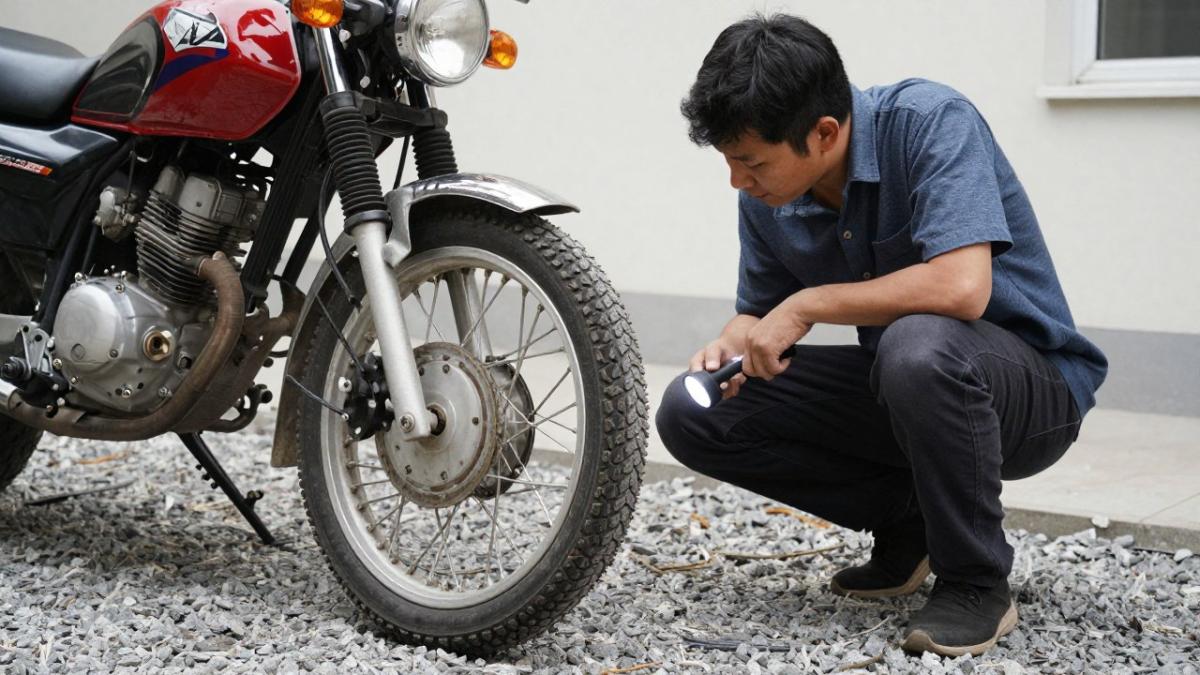
Plan to inspect the bike in daylight, with the engine cold. Use this full buyer's checklist alongside the steps below. Bring a flashlight, a rag, a tire-pressure gauge, and a friend if you can. Ask the seller in advance not to start or warm up the bike before you arrive, since a cold start can reveal problems a warm engine hides.
Cold-start protocol, engine, and oil
Before the seller touches the starter, put a hand on the engine cases and exhaust header to confirm the bike is actually cold. Then have the seller start it while you watch and listen.
- Startup behavior: it should crank promptly and settle into a steady idle within a short warm-up. Long cranking, a high or hunting idle, or a stall points to fuel, battery, or sensor issues.
- Smoke: a puff of condensation on a cold morning is normal. Persistent blue smoke suggests oil burning; steady white smoke that does not dissipate can indicate coolant entering the combustion chamber.
- Noises: listen for knocking, rattling, ticking, or grinding at idle and when blipped. A cam-chain rattle that fades with RPM may be a worn tensioner; a deep knock is a walk-away.
Watch out: a seller who has already warmed the bike, or who resists a cold start, may be hiding a hard-start or smoke issue.
Model-specific recalls and known faults
Before you inspect, look up the exact year, make, and model on the National Highway Traffic Safety Administration (NHTSA) recall site and search owner forums for that generation's known faults, regulator/rectifier failures, cam-chain tensioner wear, fuel-pump issues, stator problems, and the like. Ask the seller whether the recall work was performed and whether the known faults have been addressed. A bike with documented recall service and a known-fault fix is worth more than one with an open recall.
Frame, forks, brakes, tires, and drivetrain
Look over the frame for cracks, patchy welds, or bends, and sight down the forks and handlebars to check alignment. Then work through the rest of the bike:
- Brakes: check pad thickness, rotor wear and scoring, brake fluid level and color, and that the lever and pedal feel firm, not spongy.
- Tires: check tread depth and date codes (a tire older than about five years should be replaced regardless of tread), and look for cupping or uneven wear.
- Chain and sprockets: check chain slack against the owner's manual spec, look for tight links, and inspect sprocket teeth for hooking or wear.
- Suspension: press down on the bike and watch for bouncing or oil on the fork seals; check steering-head bearings for notchiness with the front wheel off the ground.
Watch out: a bike that pulls to one side or has a front wheel that does not align with the frame may have a bent frame or fork, do not buy it until a mechanic checks it.
Use this checklist to cover the main areas of the bike during your inspection.
| Area | What to check | Watch out for |
|---|---|---|
| Cold start | Hand on cases and header, then watch the start | Long cranking, hunting idle, or stall |
| Smoke | Exhaust smoke after startup | Persistent blue or steady white smoke |
| Oil | Level and color on level ground | Milky, frothy, gritty, or fuel-smelling oil |
| Recalls and faults | NHTSA recall lookup and owner forums | Open recalls or unfixed known faults |
| Frame and alignment | Cracks, welds, bends, and fork alignment | Pulling to one side or misaligned front wheel |
| Brakes | Pad thickness, rotors, fluid, and lever feel | Spongy or soft lever or pedal |
| Tires | Tread depth and date codes | Tires older than about five years |
| Chain and sprockets | Slack against the manual spec, sprocket teeth | Tight links or hooked teeth |
Red Flags When Buying a Used Motorcycle From a Private Seller
Some warning signs should make you pause or leave:
- The seller won't let you start the bike cold
- The title is missing, damaged or in someone else's name
- The VIN doesn't match the paperwork
- The seller pushes you to pay fast or pay a deposit before inspecting
Trust your instincts. A motivated seller with nothing to hide will make the process easy.
Paying Safely: Test Rides, Independent Inspection and Financing With a Loan
This is where private-sale deals go wrong most often, so slow down and treat the transaction as its own checklist. A clean bike with a clean title can still cost you everything if the money changes hands the wrong way.
Set up the meeting safely
Meet in a public, well-lit place with room to ride, a police-station parking lot, a bank lot, or a busy shopping center. Bring a friend and tell someone where you are going. Ask the seller to bring the title, registration, and photo ID to the meeting, and confirm before you arrive that the name on the ID matches the name on the title.
Test ride with rules
Always test ride before money changes hands. Confirm the seller will allow it and that you have a valid motorcycle endorsement and your own helmet and gear. Check that the bike brakes straight from speed, shifts cleanly through the gears, tracks straight with hands light on the bars, and idles without stalling.
Watch out: a seller who insists on holding your driver's license or a cash deposit before a test ride is creating leverage you do not want to give.
Independent pre-purchase inspection
Consider hiring a qualified motorcycle mechanic for a pre-purchase inspection when the bike is expensive, modified, older, or has any history you cannot verify. A thorough pre-purchase inspection typically covers the engine, brakes, tires, suspension, steering, drivetrain and electrical system. Pay the mechanic directly and get the report in writing. If the seller refuses an independent inspection, treat that as a red flag and move on.
Avoid payment scams
Use a traceable method: a bank cashier's check, a wire through your bank, or an in-person transfer at a branch. Avoid gift cards, peer-to-peer apps with no buyer protection, overpayment schemes, and any request to ship the bike or pay a "holding deposit" to an escrow service the seller recommends.
Watch out: a common scam involves a "seller" who is out of state, claims a shipper will deliver the bike, and asks you to pay through a fake escrow site, the bike does not exist.
Financing a private-party purchase
If you need a loan, get pre-approved before you shop and ask the lender directly whether it finances private-party motorcycle sales. Many banks and credit unions do, but terms and age/mileage limits vary. Have the lender confirm what documents it needs, typically the signed title, a bill of sale, and proof of insurance, so the closing does not stall.
Close the deal in one sitting
At the exchange, complete and sign the title in the correct sections, write a bill of sale listing the VIN, year, make, model, odometer reading, sale price, date, and both parties' names and signatures, and get a receipt for the payment. Photograph the signed title, the bill of sale, and the seller's ID. Take the keys, all keys, and any spare fobs.
Finalizing the Sale and Your Next Step Before Buying
Before you pay, confirm that the title is signed over to you and that the bill of sale lists the VIN, price, date and both signatures. See how the paperwork and payment side of a private sale works.
If you're ready to look at options, you can browse our current inventory at CDM Truck And Cycle Sales. We also help buyers in the Clute area find used motorcycles and trucks with a clear, honest process.
Frequently Asked Questions
Can I buy a used motorcycle from a private seller if it has a loan?
Yes, but the seller must pay off the lender before the title can transfer to you cleanly. Ask the seller for a payoff letter from the lienholder and confirm the lien is released on the title. If the seller still owes money, the lender holds a claim on the bike, so do not hand over cash until the payoff is confirmed. Many buyers use a payoff at closing, where your payment goes directly to the lender and the remainder goes to the seller.
What documents do I need when buying a used motorcycle?
At minimum, you need the certificate of title signed over to you, a bill of sale with the price, date, VIN and both signatures, and proof the seller has the right to sell. Check that the VIN on the title matches the frame. Service receipts and maintenance records help show how the bike was cared for. Confirm the title is clean, not salvaged or rebuilt, before you pay.
What are the red flags when buying a used motorcycle?
Watch for a seller who refuses a test ride or a cold start, a VIN that is scratched, painted over or does not match the paperwork, and a title that is missing, lost or in another person's name. Oil or coolant leaks, mismatched paint or bolts, and a bike that pulls to one side are also warning signs. Be cautious of pressure to pay in cash quickly or wire money before you see the bike running.
How do I inspect a motorcycle before buying it?
Start with a cold engine, since a warm engine can hide starting problems. Check oil level and color, coolant, brake fluid, tire wear, chain slack and sprocket condition. Look at the frame, fork seals and suspension for leaks or damage. Ride the bike at low and highway speeds to test brakes, clutch, throttle, lights and handling. A pre-purchase inspection by a mechanic is worth the cost on any bike you are serious about.
Search All Vehicles at CDM Truck And Cycle Sales to see what's available today.