 how-to
Finding Reliable Cars in Clute: A 2026 Buyer's Guide
Table of Contents
- Finding Reliable Cars in Clute: Start With a Plan
- The Used Car Inspection Checklist That Catches Problems Early
- Why a Used Car Vehicle History Report Is Non-Negotiable
- Questions to Ask a Used Car Dealer Before You Commit
- How to Test Drive a Used Car Like a Mechanic
- Pricing, Financing, and the Out-the-Door Number
- Matching Reliability to Your Budget and Daily Route
- Conclusion: Reliable Cars in Clute Are Found, Not Lucked Into
- Frequently Asked Questions
Last Updated: October 18, 2026
Finding Reliable Cars in Clute: Start With a Plan
Finding reliable cars in Clute starts with a process, not a feeling. This guide from CDM Truck And Cycle Sales covers the checks, questions, and numbers that separate a solid used truck from someone else's problem.
Reliability is rarely luck. It is the result of a disciplined inspection, a title check, and a test drive that actually tests something.
Reliable cars share three traits: a clean title, documented maintenance, and a seller willing to answer hard questions.
The Used Car Inspection Checklist That Catches Problems Early
A used car inspection checklist is a fixed sequence of visual and mechanical checks you run before any money changes hands.
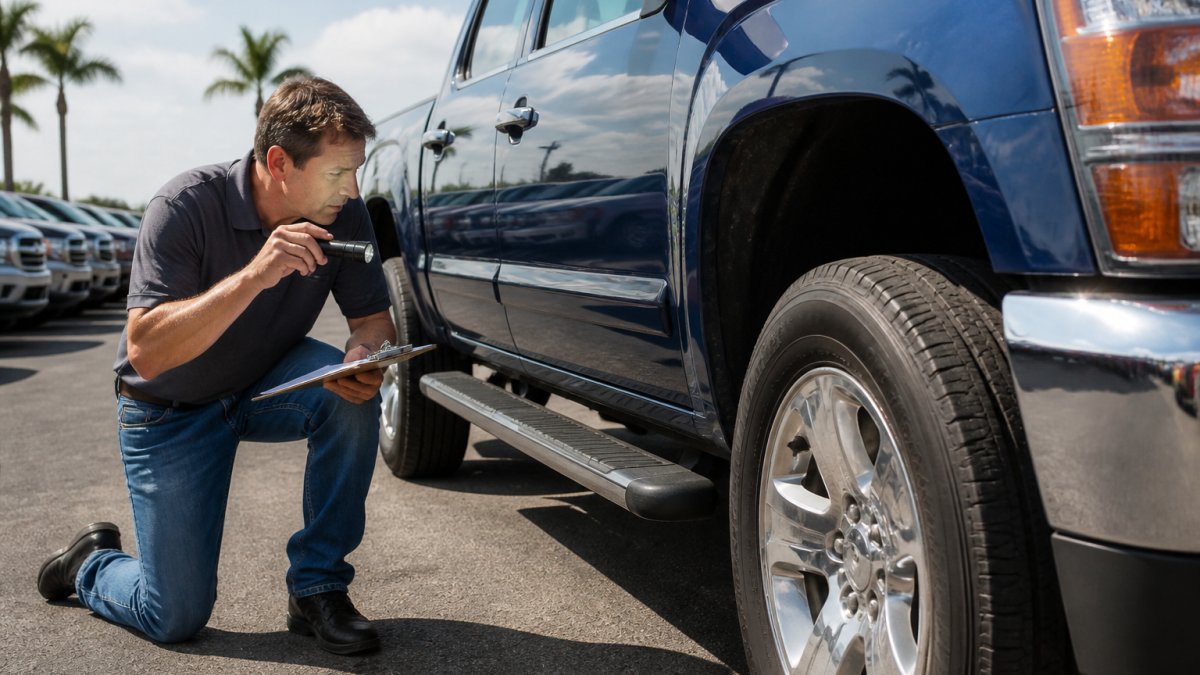
Bring a flashlight, a clean rag, and a magnet, and plan on 30 to 45 minutes in daylight. Skip dusk or rain, since both hide bodywork and fluid leaks.
Exterior and Underbody Checks
Start at the tires and work around the vehicle. Uneven edge wear points to alignment or suspension problems, and mismatched tire brands suggest a budget-minded owner.
- Check panel gaps for consistency; uneven gaps hint at accident repair
- Look for overspray on trim, glass, and wheel wells
- Run the magnet over steel body panels to find filler under paint
Under the Hood and Interior
Open the hood with the engine cold. Dark, gritty oil on the dipstick suggests stretched service intervals. Check coolant and brake fluid color, and look for cracked belts and hoses.
Inside, test every switch, window, and vent. A musty smell or damp carpet points to water intrusion, which matters on the Gulf Coast. Pedal and driver's seat wear should roughly match the odometer.
Why a Used Car Vehicle History Report Is Non-Negotiable
A used car vehicle history report records title events, reported accidents, and mileage entries tied to a VIN.
Get the VIN from the seller and pull the report yourself. Never accept a seller's printout without verifying the VIN matches the vehicle in front of you.
What to look for:
- Title status: clean, rebuilt, salvage, or flood
- Accident history: airbag deployment and structural damage entries
- Mileage: a steady progression with no sudden drops
The National Highway Traffic Safety Administration offers a free VIN lookup for open safety recalls. Run it before you buy, and confirm any recall repairs were completed.
Questions to Ask a Used Car Dealer Before You Commit
Questions to ask a used car dealer should focus on history, condition, and paperwork. Ask in person, write down the answers, and treat vague responses as a signal to slow down.
The five we would never skip:
- Can I see the title, and is it in your name?
- Do you have maintenance records, and who performed the work?
- Has this vehicle been in an accident or had paint or bodywork?
- What is the out-the-door price, including all fees and taxes?
- What happens if a problem shows up in the first month?
That last question matters most. At CDM Truck And Cycle Sales, we would rather you ask it upfront than discover the answer later. A straight answer builds trust; a deflection tells you something.
How to Test Drive a Used Car Like a Mechanic
A proper test drive is a diagnostic, not a joyride. Plan on at least 20 minutes and insist on a cold start, because the first 30 seconds of engine operation reveal more than the next 20 minutes.
Bring a friend and split the job: one drives while the other listens, watches the exhaust, and takes notes. A second set of ears catches noises the driver tunes out.
Stage 1: The Cold Start
Before you touch the accelerator, do this:
- Confirm the engine is cold to the touch
- Turn the key to run: all warning lights should illuminate, then most should go out after startup
- Listen for a rattle, tick, or rough idle in the first 10 seconds
A check-engine light that stays on after startup is a stop sign. Ask the seller to pull the codes with an OBD-II scanner, or bring your own. Sellers sometimes clear codes before a showing; if the light never illuminates during the run-position test, the bulb may have been pulled.
Stage 2: The Low-Speed and Parking-Lot Test
Before you reach traffic, test the systems that fail quietly:
- Turn the wheel lock to lock at idle and listen for whines, groans, or clicking
- Shift through every gear, including reverse and park, with your foot on the brake
- Test the brakes at walking speed for a spongy pedal, pulling, or grinding
This is also where you check for water intrusion. Press a palm into the footwell and trunk carpet; dampness or a musty smell after rain signals a leaking seal, clogged sunroof drain, or flood exposure.
Stage 3: The Road Loop
Your route should include a highway on-ramp, stop-and-go traffic, and rough pavement. Run this sequence:
- Accelerate firmly onto the on-ramp and feel for hesitation, slipping, or a delayed downshift
- Hold highway speed and listen for wind noise, tire roar, or steering-wheel vibration
- Brake hard in a safe, empty area and check for pulling, pulsation, or a soft pedal
Reading the Symptoms
What you hear and feel points to specific systems:
- Clicking on turns: worn constant-velocity joints or a failing half-shaft
- Clunk over bumps: worn sway-bar links, control-arm bushings, or strut mounts
- Vibration at highway speed: tire balance, a bent wheel, or worn engine mounts
A test drive that produces small issues is not automatically a rejection. What matters is whether the seller can explain them and whether the price reflects them. A car with a documented recent brake job and new tires is a different proposition from one with the same symptoms and no records.
Pricing, Financing, and the Out-the-Door Number
The out-the-door price is the only number that matters: vehicle price plus tax, title, registration, and any dealer fees. Negotiate against that figure, not the sticker or the monthly payment.
Ask for it in writing before discussing monthly payments. Payment-focused conversations hide the total cost, and long loan terms shrink the payment while raising what you pay overall.
| Cost Item | What It Covers | How to Handle It |
|---|---|---|
| Asking price | Vehicle only | Compare against similar listings in the same condition and mileage band |
| Taxes and title | State and county fees | Non-negotiable, verify the math against your state motor vehicle agency's published rates |
| Dealer fees | Documentation and prep | Ask what each fee covers and whether it is negotiable |
| Financing | Interest over the loan term | Get a pre-approval from your bank or credit union first |
| Ownership costs | Fuel, insurance, maintenance | Budget monthly before you buy |
Verifying the Fees
Dealer documentation fees vary widely by state and are sometimes capped by law. Ask for the fee itemized in writing and check it against your state's motor vehicle agency guidance.
Taxes and title work are set by statute and are not negotiable, but the math is worth checking. Confirm the taxable amount reflects any trade-in credit your state allows, and confirm the title and registration figures match the published fee schedule.
Structuring the Loan
Get pre-approved by a bank or credit union before you shop. That sets your ceiling, gives you a rate to compare against dealer financing, and tells you the maximum term to consider. A few rules of thumb:
- A longer term lowers the monthly payment but raises total interest; compare total loan cost, not the payment
- A larger down payment reduces the amount financed and the risk of being upside down
- Ask about a prepayment penalty; if there is one, you cannot save interest by paying off early
Negotiating the Total
Negotiate the out-the-door number, not the monthly payment. Start with market value based on comparable listings, subtract the cost of any repairs your inspection identified, and offer against that figure.
For trade-ins, ask for the offer in writing and compare it against the savings on sales tax, since many states credit trade-in value against the taxable amount. Your state's motor vehicle agency publishes the current rules.
On a tight budget, the practical sequence is: define the vehicle, get pre-approved, inspect the specific car, negotiate the out-the-door number, and only then discuss financing terms. Buyers who reverse that order tend to pay more for the same vehicle.
Matching Reliability to Your Budget and Daily Route
Reliability is relative to how you drive. A commuter logging short trips around town has different needs than a contractor hauling equipment five days a week.
Match the vehicle to the job:
- Short daily commutes: prioritize fuel economy and easy parts availability
- Heavy work use: prioritize payload, cooling capacity, and transmission condition
- Family hauling: prioritize safety features and rear-seat space
- Coastal driving: prioritize rust protection and underbody condition
Mileage matters less than maintenance. A well-kept higher-mileage truck with records often outlasts a low-mileage one with skipped oil changes.
If we do not have the right vehicle in stock, we use our industry network to source it.
Conclusion: Reliable Cars in Clute Are Found, Not Lucked Into
The buyers who end up happy are the ones who inspected, asked, and did the math before signing. That method works whether you buy from us or anywhere else.
If you want a simpler path, CDM Truck And Cycle Sales offers a stress-free buying experience with high-quality cars at affordable prices. We will buy your trade-in even if you do not buy from us, and our network can track down a specific vehicle when it is not on the lot.
Frequently Asked Questions
How can I tell if a used car is reliable before I buy it?
Look at three things: the vehicle history report, the maintenance records, and a pre-purchase inspection by an independent mechanic. A clean title with no reported accidents is a good start, but service records showing regular oil changes and scheduled maintenance tell you more about how the vehicle was treated. Mileage matters too, but a well-maintained truck with 120,000 miles often beats a neglected one with 60,000. Bring a checklist, test drive it on the roads you actually use, and budget for a mechanic's inspection before signing anything.
What questions should I ask a used car dealer in Clute?
Ask for the out-the-door price in writing, including taxes, title, and any documentation fees. Ask whether the vehicle has a clean title, how many previous owners it had, and whether any warranty remains. Request the vehicle history report and service records. Ask if you can take it to an independent mechanic for a pre-purchase inspection, and ask what happens if a problem shows up in the first 30 days. A dealer who answers these directly and puts numbers in writing is easier to trust.
Should I get a used car inspected by a mechanic before buying?
Yes. A pre-purchase inspection typically runs $100 to $200 at an independent shop and can reveal frame damage, worn suspension, fluid leaks, or pending transmission issues that a short test drive won't show. Schedule it before you negotiate the final price, and ask the dealer whether the vehicle can be taken off-site for the inspection. If a seller refuses, treat that as a warning sign. The inspection cost is small compared to a repair bill on a truck you just financed.
What should I check on a used car inspection checklist?
Start outside: look for mismatched paint, uneven tire wear, rust along the frame and wheel wells, and leaks under the vehicle. Under the hood, check fluid colors and levels, belt condition, and signs of coolant or oil seepage. Inside, test every switch, the air conditioning, and the warning lights at startup. Then test drive on both highway and stop-and-go roads, listening for clunks, vibrations, and delayed shifting. Write down anything you find and use it in the negotiation.