 Comparison
Which Used Trucks Are Most Reliable for Heavy Hauling?
Last Updated: October 26, 2026
Quick Summary
Reliable used trucks heavy hauling are best found in three-quarter-ton or heavier models from 2011-2016 with proven diesel powertrains like the 6.7L Power Stroke, Duramax, or Cummins. The Ram 3500 leads with a 31.9% probability of exceeding 250,000 miles, while Ford F-250/F-350 and Chevrolet Silverado 2500/3500 offer equally proven reliability for contractors and haulers.
- Ram 3500 has 31.9% probability of exceeding 250,000 miles according to reliability research
- Model years 2011-2016 represent the sweet spot, predating aggressive emissions systems while incorporating modern engineering
- Diesel engines outlast gasoline counterparts by 50,000+ miles under heavy use and produce peak torque at lower RPMs
- Three-quarter-ton trucks have payload capacity of 3,500+ pounds and towing capacity of 18,000+ pounds with reserve capacity
- Pre-purchase inspection must verify engine condition, transmission smoothness, suspension tightness, brake pad thickness, and frame integrity
Table of Contents
- Top Reliable Used Trucks for Heavy Hauling
- Best Used Trucks for Towing: Model Years and Powertrains That Deliver
- Understanding Used Truck Towing Capacity by Year
- Used Diesel Trucks for Hauling: Why Diesel Dominates Heavy Work
- Heavy-Duty vs. Light-Duty: What You Actually Need
- Used Truck Inspection Checklist Before You Buy
- Finding Your Next Work Truck at CDM
- Frequently Asked Questions
When you're shopping for reliable used trucks heavy hauling that can handle serious work, reliability isn't optional, it's everything. A breakdown on a job site costs money and credibility. That's why we've analyzed the data on reliable used trucks for heavy hauling to help you find vehicles that deliver real durability under demanding conditions.
The stakes are high. According to iSeeCars 2026 study on long-lasting vehicle longevity, 12 pickup truck models have been identified as most likely to reach 250,000 miles, a critical benchmark for contractors and haulers. At CDM Truck And Cycle Sales, we've helped countless buyers in the Gulf Coast region find trucks that don't just survive heavy work; they thrive under it. Below, we'll show you exactly how to identify, evaluate, and purchase a reliable used truck for heavy hauling that matches your real-world needs.
Top Reliable Used Trucks for Heavy Hauling
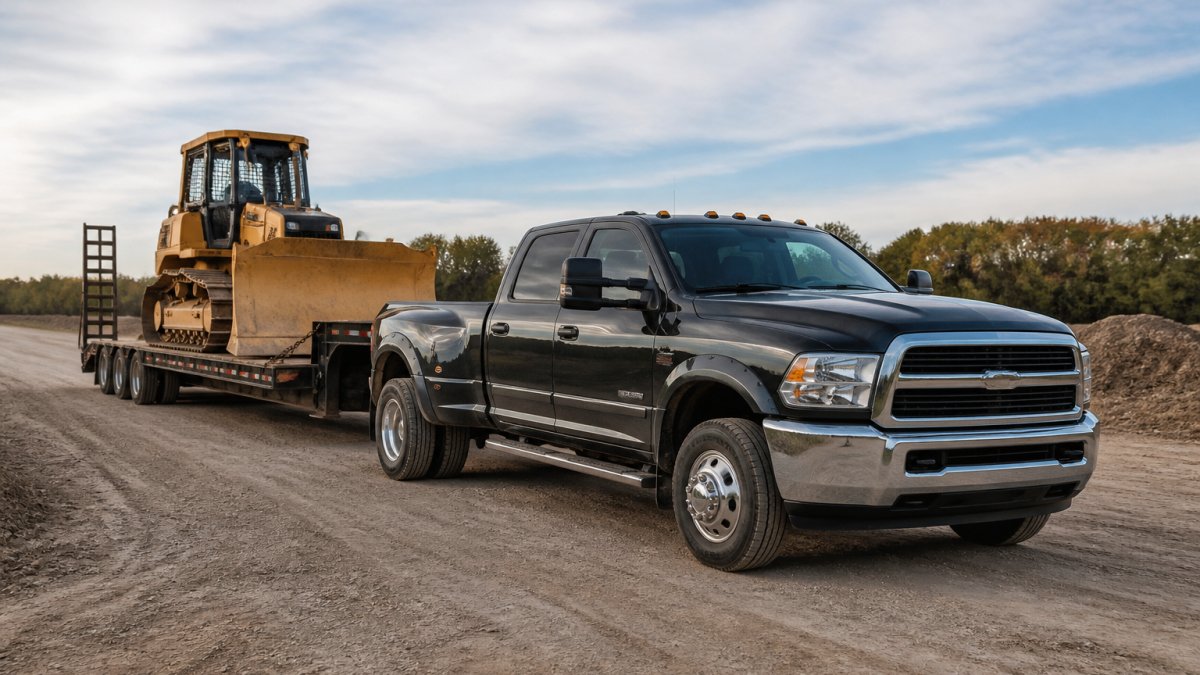
The best reliable used trucks heavy hauling share two traits: proven diesel powertrains and a track record of surviving high-mileage service. The Ram 3500 consistently ranks as the top choice for longevity, holding a 31.9% probability of exceeding 250,000 miles according to recent reliability research. This isn't coincidence, the Ram 3500's 6.7L Power Stroke diesel engine has earned its reputation through years of contractor use.
The Ford F-250 and F-350 with the 6.7L Power Stroke diesel represent another tier of proven reliability. The 2011-2016 model years, in particular, are cited as top picks for heavy-duty contracting because they combine mechanical simplicity with proven durability. These trucks lack the sensor-heavy complexity of newer models, which means fewer electronic failures in the field.
Chevrolet Silverado 2500 and 3500 models with the Duramax diesel are equally capable. What sets them apart is their reputation for consistent towing performance and lower maintenance costs compared to some competitors. The Duramax engine, especially in 2011-2015 configurations, handles sustained heavy loads without the thermal stress that plagues less strong designs.
For budget-conscious buyers, used Ram HD models can make entry into heavy-duty capability accessible without sacrificing reliability. This opens the door for small contractors and owner-operators to access proven platforms.
Best Used Trucks for Towing: Model Years and Powertrains That Deliver
Towing capacity matters, but so does sustained performance under load. A truck rated for 20,000 pounds that struggles thermally on a summer haul isn't reliable, it's a liability.
Model years 2011-2016 represent the sweet spot for used heavy-duty trucks. These years predate the aggressive emissions systems that introduced complexity, yet they incorporate modern enough engineering for reliability.
The 2017-2019 model years offer newer features and lower mileage but at higher cost. If your budget allows, these years provide the same proven powertrains with updated cab comfort and technology. However, they don't offer meaningfully better towing reliability than the 2011-2016 generation.
Avoid 2006-2010 models unless you're mechanically inclined and budget-constrained. These trucks can work, but they're older, often higher-mileage, and require more frequent maintenance. For heavy hauling, the extra investment in a 2011+ truck pays dividends in downtime prevention.
Diesel powertrains dominate this category for good reason. UTI industry standards for truck classification categorize Class 6-8 trucks as the standard for heavy-duty logistics and large cargo loads. Diesel engines deliver torque earlier in the RPM range, handle sustained high loads, and typically outlast gasoline counterparts by 50,000+ miles under heavy use. Gasoline trucks work for lighter hauling, but diesel is non-negotiable for serious heavy-hauling operations.
Understanding Used Truck Towing Capacity by Year
Towing capacity is printed on the door jamb, but real-world performance depends on the entire truck ecosystem: frame strength, suspension geometry, transmission programming, and brake capacity.
Class 6-8 trucks are engineered for payloads and towing that light-duty trucks cannot handle safely. A half-ton truck might tow 12,000 pounds on paper; a three-quarter-ton truck handles 18,000+ pounds with the reserve capacity to do it repeatedly without strain. The difference isn't marketing, it's frame reinforcement, suspension tuning, and transmission cooling.
Federal regulations establish that cargo securement rules require proper restraint for loads exceeding 10,000 lbs. This threshold matters because it signals where heavy-duty equipment begins. Trucks capable of consistently hauling loads in this range need strong brakes, transmission coolers, and frame integrity that older or lighter-duty trucks lack.
Model year affects capacity ratings, but the real story is in the powertrain. A 2015 F-350 with the Power Stroke diesel can handle sustained heavy towing far better than a 2020 F-150, despite the F-150 being newer. The F-350 was engineered from the frame up for heavy work.
When comparing trucks, ignore marketing claims and focus on Gross Vehicle Weight Rating (GVWR), Gross Combined Weight Rating (GCWR), and tongue weight specifications. These numbers tell you what the truck is actually engineered to handle.
| Model Year Range | Typical Towing Capacity (3/4-ton diesel) | Real-World Heavy-Hauling Suitability | Notes |
|---|---|---|---|
| 2006-2010 | 15,000-18,000 lbs | Limited; higher maintenance | Older emissions systems, more frequent repairs |
| 2011-2016 | 18,000-22,000 lbs | Excellent; proven reliability | Sweet spot for used trucks; established track record |
| 2017-2019 | 20,000-25,000 lbs | Excellent; lower mileage | Higher cost but newer with same powertrains |
| 2020+ | 22,000-35,000 lbs | Good; complex electronics | Advanced but more sensors = higher failure risk |
Used Diesel Trucks for Hauling: Why Diesel Dominates Heavy Work
Diesel engines have dominated heavy hauling for decades, and the data supports the preference. Diesel fuel contains more energy per gallon than gasoline, and diesel engines extract that energy through compression ignition rather than spark plugs.
A diesel engine produces peak torque at lower RPMs, meaning the truck pulls hard from a standstill and maintains that pull across the load range.
Longevity is the real advantage. Diesel engines, when maintained, routinely exceed 300,000 miles. The strong construction, thicker cylinder walls, heavier pistons, stronger crankshafts, is built to withstand the higher compression ratios and sustained load that heavy hauling demands.
The 6.7L Power Stroke (Ford), Duramax (Chevrolet), and Cummins (Ram) are the proven platforms. Each has its advocates, but all three have demonstrated longevity in heavy-duty service.
Maintenance costs for diesel are higher per service but spread across more miles. A diesel truck serviced every 7,500 miles might accumulate 300,000 miles in 40 services.
Heavy-Duty vs. Light-Duty: What You Actually Need
The gap between a half-ton and three-quarter-ton truck isn't cosmetic. It's engineering.
A half-ton truck (like the F-150, Silverado 1500, or Ram 1500) is optimized for personal use: commuting, light hauling, weekend projects.
A three-quarter-ton truck (F-250, Silverado 2500, Ram 2500) is engineered for work. The frame is reinforced, the suspension is stiffer, payload capacity reaches 3,500+ pounds, and towing capacity climbs to 18,000+ pounds with reserve capacity.
For contractors and serious haulers, the choice is straightforward: three-quarter-ton or heavier. A half-ton truck used for heavy hauling will deteriorate faster, develop suspension wear earlier, and eventually fail under loads it wasn't designed for.
If your hauling is occasional and light, a small trailer, landscaping materials, light equipment, a half-ton truck with a quality powertrain can work. If you're hauling regularly or moving heavy loads, the three-quarter-ton is the only rational choice.
Used Truck Inspection Checklist Before You Buy
A used truck can hide problems. A thorough pre-purchase inspection reveals them.
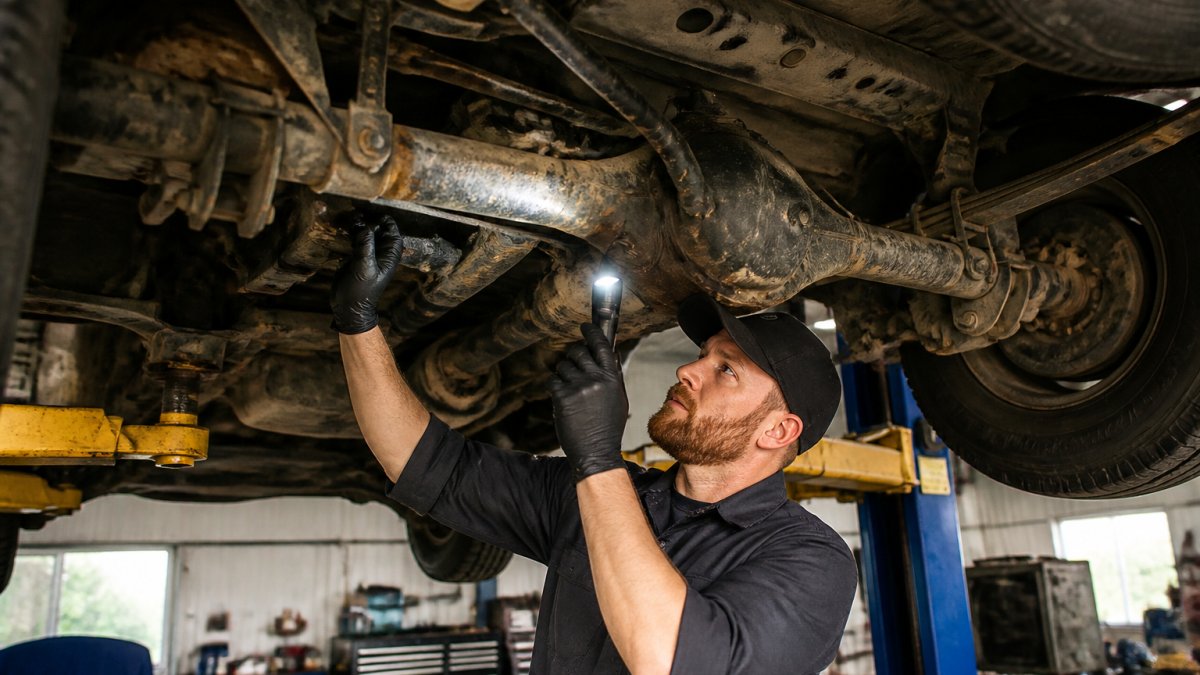
Start with the engine. Listen for knocking, ticking, or grinding sounds on cold start. Diesel engines should fire cleanly without excessive smoke.
Transmission behavior matters. Shift from Park to Drive and feel for smooth engagement. Listen for clunking or grinding. Under light acceleration, the transmission should shift smoothly without hesitation or harshness.
Suspension components wear under heavy loads. Grab each wheel and try to move it side to side. Excessive play indicates worn ball joints or tie rods.
Brakes are critical for a truck that hauls. The pedal should be firm, not spongy. Listen for grinding sounds when braking.
Check the frame for rust, welding, or collision damage. Surface rust is normal; deep pitting or structural rust is serious.
Examine the bed for rust, dents, and floor condition. A rusted-through bed floor is a cosmetic issue but suggests the truck has been exposed to harsh conditions.
Pre-Purchase Inspection Checklist:
- Engine starts cleanly; no excessive smoke or knocking
- Oil level adequate; oil color acceptable (not black or gritty)
- No active leaks from engine, transmission, or differentials
- Transmission shifts smoothly without grinding or harsh engagement
- Suspension components tight; minimal play in wheels
- Shocks and springs firm; truck settles after bouncing
- Brake pedal firm; pads have adequate thickness
- Frame free of deep rust, cracks, or welding repairs
- Bed floor solid; no rusted-through sections
- Service records available for last 3-5 years
- No warning lights on dashboard; check for stored codes with scanner
- Test drive at highway speeds; listen for unusual noises
Finding Your Next Work Truck at CDM
The process of finding a reliable used truck shouldn't be stressful. At CDM Truck And Cycle Sales, we specialize in connecting buyers with trucks built for heavy work, vehicles that can handle your demands without surprises.
Our approach is straightforward. We maintain a curated inventory of used trucks selected for reliability and capability. If we don't have exactly what you're looking for in stock, our extensive industry network allows us to source the specific truck you need.
You can explore our full truck inventory to see what's currently available. For context on how pricing and availability shift across model years, our 2026 used truck market trends guide breaks down what's realistic in today's market.
When you're ready to buy, visit our showroom or contact us to discuss your specific hauling needs. We'll help you match the right truck to your work, explain what you're getting, and make sure you understand the truck's condition and capability. No surprises. No hidden fees.
Finding a reliable used truck for heavy hauling requires balancing proven powertrains, appropriate capacity, and honest evaluation. At CDM Truck And Cycle Sales, we help buyers find trucks that deliver on those principles. Search all vehicles to start your search, or visit our showroom to discuss your hauling requirements in detail.
Frequently Asked Questions
What is the most reliable used truck for heavy hauling?
The Ram 3500 ranks first for longevity, with a 31.9% probability of reaching 250,000 miles. The 2011-2016 Ford F-250 and F-350 with the 6.7L Power Stroke diesel are also top choices for heavy-duty contracting due to mechanical simplicity and proven durability. For budget buyers, the 2020 Ford Ranger offers strong reliability at a lower price point. Choose based on your specific towing and payload needs, not just brand reputation.
How do I know the used truck's towing capacity by year?
Check the vehicle's door jamb label or owner's manual for the Gross Vehicle Weight Rating (GVWR) and Gross Combined Weight Rating (GCWR). These figures determine maximum towing capacity. Older trucks (2011-2016) often have simpler, more transparent specifications than newer models. Cross-reference the model year and engine type on the manufacturer's website. Federal Motor Carrier Safety Administration (FMCSA) regulations require cargo securement for loads over 10,000 lbs, so verify your truck meets that threshold if you're hauling commercially.
Should I buy a diesel or gas truck for heavy hauling?
Diesel engines dominate heavy hauling because they deliver higher torque, better fuel economy under load, and longer engine life. A used diesel truck typically costs more upfront but saves money over time through fewer repairs and better towing performance. Gas engines suit lighter work and offer lower purchase prices. For serious hauling work, diesel is the standard choice. The 6.7L Power Stroke diesel in Ford F-250/F-350 models is a proven option for contractors.
What mileage is too high for a used work truck?
High mileage alone doesn't disqualify a truck if maintenance records are solid. Trucks built for longevity can exceed 250,000 miles reliably. Instead of focusing on mileage, inspect service history, engine condition, transmission response, and frame integrity. A well-maintained 200,000-mile truck often outperforms a neglected 100,000-mile truck. Request full maintenance records and have a pre-purchase inspection done by a diesel specialist if you're considering a high-mileage heavy-duty model.