 Listicle
Benefits of Buying From Local Dealerships
Table of Contents
- Why the Benefits of Buying From Local Dealerships Still Matter
- Local Dealership vs Private Seller: What You Actually Get
- The Real Cost of Buying Local: Fees, Taxes, and Ownership
- Financing and Trade-In: How a Local Dealer Simplifies the Deal
- Questions to Ask When Buying a Used Car
- Test Drives, Inspections, and Service You Can Actually Use
- How to Verify Dealer Reputation and Avoid Misleading Offers
- Frequently Asked Questions
Last Updated: October 6, 2026
Why the Benefits of Buying From Local Dealerships Still Matter
At CDM Truck And Cycle Sales, we hear the same concerns every week from buyers in the Clute area. They've been burned before. They've been lowballed on a trade-in.
Here's what a local dealership actually gives you that a private seller or a faraway dealer cannot:
- A physical address you can return to if issues surface
- A reputation tied to customer reviews in your own community
- Access to financing and trade-in options under one roof
- A service department that knows the vehicle's history
The Federal Trade Commission's guidance on buying used cars is clear that buyers have specific rights, but those rights are far easier to exercise when the seller is down the street.
Local Dealership vs Private Seller: What You Actually Get
A local dealership offers structured accountability that private sellers, distant dealers, and online retailers cannot fully match, but each channel has real trade-offs, and the right choice depends on what you value most. Here is a side-by-side decision framework that most buying guides skip.
| Factor | Local Dealership | Distant Dealer | Online Retailer | Private Seller |
|---|---|---|---|---|
| Warranty options | Often available, manufacturer-backed | Usually available | Varies; often limited third-party | Rarely offered |
| Financing | In-house or arranged with multiple lenders | Arranged remotely | Pre-arranged online | Cash only, typically |
| Inspection access | Service department on site; independent mechanics welcome | You arrange after delivery | Limited; return-window dependent | You arrange independently |
| Recourse if problems arise | Dealer reputation and physical location at stake | Long-distance; harder to enforce | Return policy and arbitration clauses | Limited to none |
| Paperwork handling | Dealer manages title and registration | Mailed documents; delays common | Handled by retailer, often with fees | Buyer often handles it |
| Delivery / pickup | Drive it home same day | Shipping fee or long drive | Home delivery, often with a fee | Meet at a neutral location |
| Price transparency | Negotiable; fees disclosed on request | Advertised price may exclude fees | Listed price usually firm | Negotiable, cash-based |
Where Private Sellers Fall Short
The biggest gap is post-sale support. A private seller has no service department, no loaner vehicles, and no incentive to help once the cash changes hands. If you discover a problem a month later, you are on your own.
A common mistake buyers make is assuming a lower sticker price from a private seller means a better deal. Factor in a pre-purchase inspection (often $100-$200 at an independent shop), potential immediate repairs, the cost of a temporary tag and title transfer, and the hours spent handling paperwork yourself, and the gap often narrows or disappears.
Where Distant Dealers and Online Retailers Fall Short
A distant dealer may advertise a lower price, but you are usually adding shipping, a trip, or both, and you lose the ability to walk into the service bay if something goes wrong. Online retailers have improved dramatically, but their return windows are typically measured in days, not months, and the vehicle arrives before you have ever sat in it. If the seats do not fit your frame or the truck does not tow the way you expected, you are working through a process, not a handshake.
When a Private Seller or Online Retailer Makes Sense
None of this means local is always right. A private seller can be the best path if you know the owner, the vehicle has full service records, and an independent mechanic inspects it first. An online retailer can work if the price is materially lower, the return policy is generous, and you are comfortable with a remote transaction. The point is to compare channels on total cost and total risk, not just the number on the windshield.
The Real Cost of Buying Local: Fees, Taxes, and Ownership
The purchase price is only part of what you'll pay. Local dealerships charge documentation fees and handle title and registration paperwork, which varies by state and county. Ask for a full breakdown in writing before you commit.
Total cost of ownership includes more than the sale price:
- Sales tax and registration: Required in most states, calculated on the purchase price
- Dealer documentation fees: Vary by dealer and location
- Insurance: Rates depend on the vehicle and your coverage
- Maintenance and repairs: Budget for both, especially on older trucks
- Financing interest: Even a small rate difference adds up over a multi-year loan
For current fees and tax rates that apply to your purchase, check with the dealer directly and confirm with your state motor vehicle department before signing.
Financing and Trade-In: How a Local Dealer Simplifies the Deal
Financing through a local dealership means one conversation instead of five. Instead of applying at multiple banks and credit unions yourself, the dealer works with lenders to find options that fit your credit profile. That convenience has a caveat: dealer-arranged financing is not always the lowest rate. Compare any offer against your own bank or credit union before signing.
How to Compare Financing Offers Without Getting Played
Dealers and lenders can present the same loan in ways that look different. To compare apples to apples, ask every lender for these four numbers in writing:
- Annual Percentage Rate (APR), not just the interest rate. APR folds in fees.
- Loan term in months, a 72- or 84-month loan lowers the payment but raises total interest.
- Total amount financed, the out-the-door price minus your down payment and trade-in equity.
- Total of payments, the bottom-line number you will actually pay over the life of the loan.
A common pattern is a dealer beating your bank on monthly payment while losing on total cost, because the term was stretched. Always compare total of payments, not monthly payment.
A Step-by-Step Buying and Negotiation Checklist
Most guides tell you to negotiate but skip the mechanics. Here is a sequence that keeps the deal clean:
- Set your out-the-door budget first. That is the price plus tax, title, registration, and any dealer fees, not the sticker.
- Get pre-approved by your own bank or credit union. This gives you a rate to beat and removes financing pressure from the negotiation.
- Request the out-the-door price in writing from each dealer you are considering, on the specific vehicle by VIN.
- Separate the three negotiations: vehicle price, trade-in value, and financing. Bundling them lets the dealer hide profit in one while appearing to concede on another.
- Get your trade-in appraised independently (many national chains offer free appraisals) before you accept the dealer's number.
- Review the buyer's order line by line before signing. Add-ons like paint protection, VIN etching, and extended warranties are negotiable and often removable.
- Confirm the title and registration process and who pays for what.
Used Car Trade-In at a Dealership: What to Expect
A used car trade-in at a dealership works like this: the dealer appraises your vehicle, makes an offer, and applies that amount toward your purchase.
What most guides miss is that trade-in value is negotiable, but only if you have done your homework. Check what your vehicle sells for locally, get an independent appraisal if you can, and do not accept the first number without context.
At CDM Truck And Cycle Sales, we will buy your trade-in even if you do not buy from us. That takes the pressure off the transaction entirely.
Paperwork, Registration, and Post-Sale Support
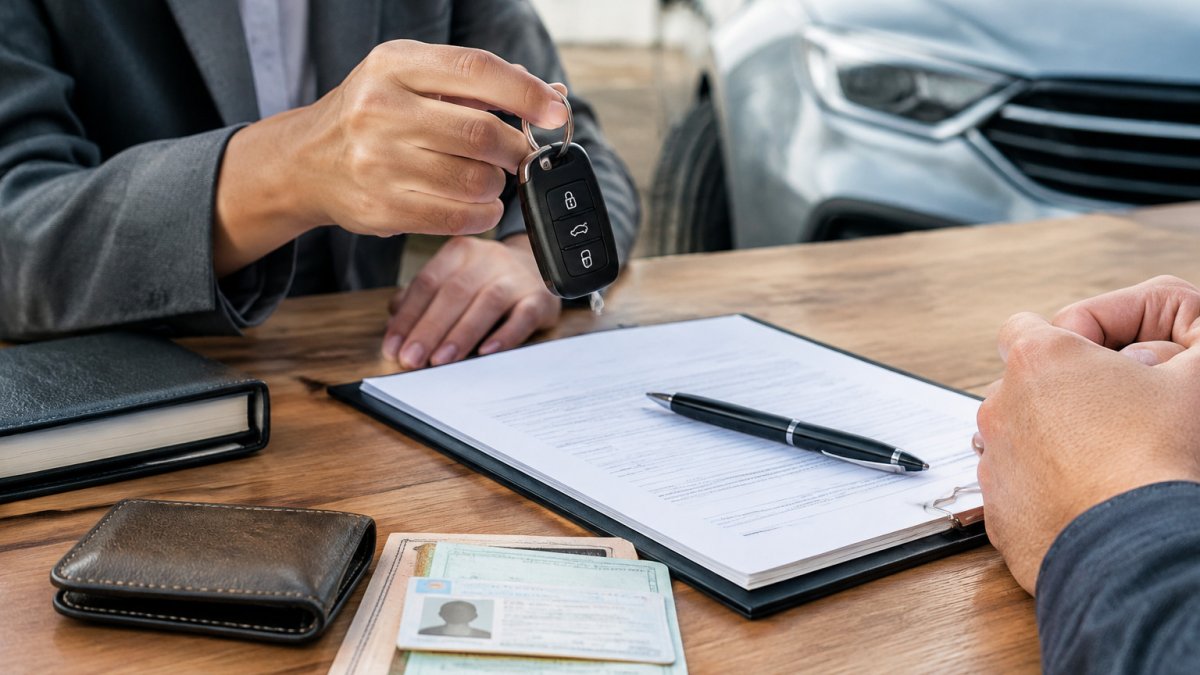
A local dealer typically handles the title transfer, temporary tag, and registration submission, which saves you a trip to the motor vehicle office. Ask for copies of everything you sign, confirm the timeline for receiving your permanent title and plates, and get the service department's direct number before you leave the lot. Post-sale support, recall notices, warranty work, and service history, is far easier to access when the dealer is a short drive away.
Questions to Ask When Buying a Used Car
The questions to ask when buying a used car should cover history, condition, and what happens after the sale. Ask them before you discuss price, not after.
Bring this list to the lot:
- Can I see the vehicle history report?
- Has this vehicle been in any accidents?
- What's the maintenance and service history?
- Is there any remaining warranty, and what does it cover?
- Can I have my own mechanic inspect it?
- What's the out-the-door price, including all fees?
- What financing terms are available, and what's the interest rate?
- What happens if a problem appears in the first 30 days?
A dealer who answers these directly, without deflecting, is a dealer worth working with. Evasiveness on any of them is a signal to walk away.
Test Drives, Inspections, and Service You Can Actually Use
A test drive and in-person inspection reveal things no photo or listing can. Sit in the seat, adjust the mirrors, listen for unusual sounds, and drive on both highway and surface streets. Ten minutes around the block isn't enough.
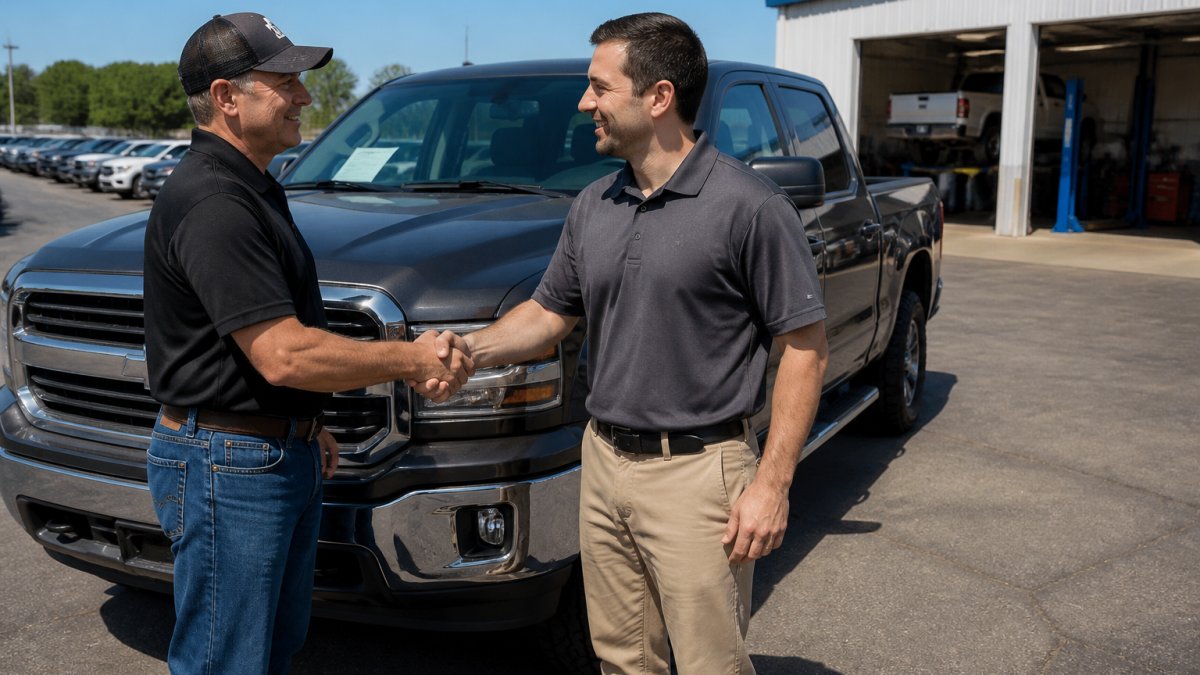
After the sale, a local dealership's service department becomes your first call for maintenance and repairs. Factory-trained technicians, genuine parts, and a service history that stays with the vehicle all add value over time.
How to Verify Dealer Reputation and Avoid Misleading Offers
Dealer reputation is verifiable if you know where to look. Start with customer reviews on Google and the Better Business Bureau, then look for patterns rather than individual complaints.
Red flags to watch for:
- Prices that are significantly below market with no explanation
- Pressure to sign before you've seen the vehicle in person
- Reluctance to provide a vehicle history report
- Fees that appear only at signing
- No physical address or a "by appointment only" model with no lot
The Better Business Bureau's tips on avoiding car buying scams recommends verifying the dealer's license and checking for unresolved complaints before you visit. A dealership with a real address, real reviews, and a real service department is accountable in ways an anonymous online listing is not.
Frequently Asked Questions
What are the benefits of buying a car from a local dealership?
Buying from a local dealership gives you face-to-face service, the ability to test drive and inspect the vehicle, and help with financing and paperwork. You also get a physical location to return to for warranty work or questions, which private sellers and online-only retailers cannot offer. Many local dealers also provide trade-in appraisals and can source specific vehicles through their industry network.
Is buying from a dealership better than buying from a private seller?
It depends on your priorities. A private seller may offer a lower asking price, but you typically get no warranty, no financing help, and no recourse if problems appear later. A local dealership provides a structured buying process, trade-in options, and often a limited warranty. For budget-conscious buyers who need reliability, the dealership route usually offers more protection.
Can I trade in my car when buying from a local dealership?
Yes. Most local dealerships appraise your current vehicle and apply its value toward your purchase. Some dealers, including those that will buy your trade-in even if you do not buy from them, make the process simple. Bring your title, registration, and service records to get an accurate offer. A trade-in also reduces the taxable amount of your new purchase in many states.
What should I check before buying a used car from a dealership?
Ask for the vehicle history report, a pre-purchase inspection by an independent mechanic, and confirmation of any remaining manufacturer warranty. Review the dealer's return policy and warranty terms in writing. Test drive the vehicle on both city streets and highways. Also ask about dealer fees, documentation charges, and whether the price includes any promotional financing conditions.
Buying a vehicle shouldn't feel like a gamble. The challenge is finding a dealer who answers your questions directly, offers fair trade-in value, and stands behind what they sell. CDM Truck And Cycle Sales was built for exactly that: we buy your trade-in even if you don't buy from us, we use our industry network to source the specific vehicle you're after, and we keep the process simple from first look to final signature. Search our inventory and see what's available today.