 Listicle
Top 10 Documents Needed for a Car Trade-In
Last Updated: November 6, 2026
Quick Summary
A car trade-in usually requires the vehicle title or a lender payoff letter, current registration, a valid government photo ID, and proof of active insurance. Bring maintenance records and all keys, remotes and accessories too. Gathering these before your appointment helps the appraisal and paperwork move quickly.
- Bring the original title, or a lender payoff letter if the car is still financed.
- Confirm the registration is current, since an expired one raises questions about the vehicle's status.
- A co-owner listed on the title may need to sign, so check requirements in advance.
- Request a written payoff letter at least a week ahead, since phone quotes drift as interest accrues.
- Bring every key, spare fob and accessory, because missing keys can affect the offer.
Table of Contents
- Why Having the Right Documents Speeds Up Your Car Trade-In
- 1. Vehicle Title or Proof of Ownership
- 2. Current Vehicle Registration
- 3. Valid Driver's License or Government Photo ID
- 4. Proof of Active Car Insurance
- 5. Lender Payoff Letter for a Car That Is Not Paid Off
- 6. Maintenance and Service Records
- 7. Both Sets of Keys, Remotes and Accessories
- Frequently Asked Questions
Selling or trading in a vehicle at a dealership moves quickly, and missing paperwork is the most common reason it stalls. If you're preparing a car trade-in in Clute, having the right documents ready before you arrive can make the appraisal and paperwork go smoothly. Getting the paperwork right matters whichever way you go.
Why Having the Right Documents Speeds Up Your Car Trade-In
A car trade-in goes faster when you arrive with the ownership and identity paperwork already in hand. Dealerships need to confirm who owns the vehicle, that it's legally registered, and whether money is still owed on it. Missing one item often means a return trip or a delay while the staff chases it down.
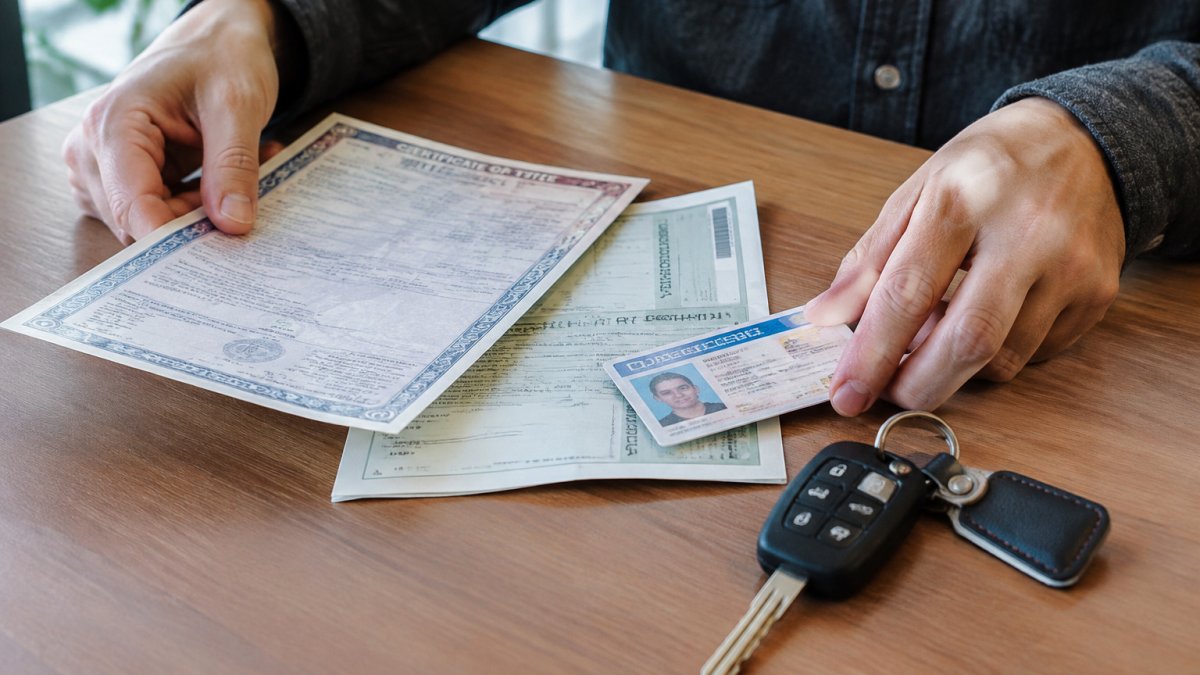
Our recommendation is to gather everything in a single folder the night before. Lay out each item below and check it off. A short list of sellers' documents is far easier to handle than a surprise request halfway through the appraisal.
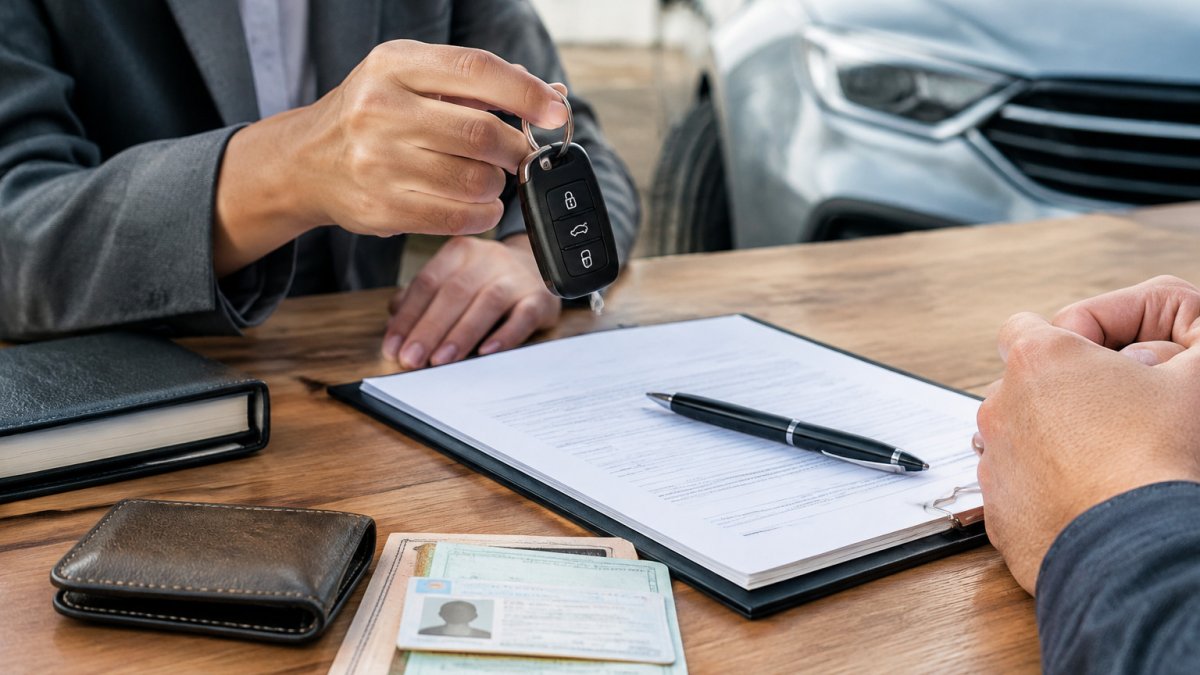
!Seller's hands sorting a vehicle title, registration and driver's license on a desk beside a set of car keys
Before you arrive, check that you have the core paperwork the dealership will ask for:
| Document | Why it is needed | Note |
|---|---|---|
| Vehicle title or proof of ownership | Proves you own the car and can transfer it | Lender may hold it if financed |
| Current vehicle registration | Confirms the car is legally registered | Check the expiration date first |
| Valid driver's license or government photo ID | Confirms the seller is the registered owner | Names must match the title |
| Proof of active car insurance | Shows the vehicle is insured on visit day | Lapsed policies are not accepted |
| Lender payoff letter | States the exact amount owed on the loan | Needed if the car is not paid off |
| Maintenance and service records | Documents care and supports a fair offer | Organize newest first |
| All keys, remotes and accessories | Missing keys can affect the trade-in offer | Include spares and manuals |
1. Vehicle Title or Proof of Ownership
The vehicle title is the core document for any car trade-in. It proves you own the car and gives the dealership the legal right to take it in exchange. Bring the original title if you have it, and make sure the names on the front match the photo ID you present.
If the vehicle is financed, you typically won't hold the title yourself. The lender does, and in many states the lender holds it electronically until the loan is satisfied. In that case, you'll need a lender payoff letter instead, covered in section 5 below. Sources that describe trade-in paperwork, including FTC research on how buyers estimate trade-in values, note that the title is the document dealers verify first.
If the title is lost. Don't assume the trade-in is off the table. Contact your state's motor vehicle agency for a replacement before your appointment. Most agencies require a completed application, a fee, and proof of identity; some also require a surety bond or a lien release if the vehicle was ever financed. Check your state motor vehicle agency for current fees and processing times, and start early. A dealer cannot complete a trade-in on a lost title, but many will hold the vehicle or the offer while you wait for the replacement to arrive.
If the title lists more than one owner. Every name on the title generally has to sign off on the transfer. If the co-owner is a spouse, former spouse, or family member who can't be present, ask the dealership in advance whether a signed power of attorney or a separate title-transfer form will be accepted. Some states require all owners to sign in front of a notary; others accept a signed release. Confirm the rule for your state with your state motor vehicle agency before you schedule the appraisal, because a missing co-owner signature is one of the most common reasons a trade-in stalls at the finance desk.
If the title is electronic. Some states issue electronic titles that are held in a state database rather than printed on paper. If your state uses an electronic title, confirm with your state motor vehicle agency how ownership is verified, and bring your registration and photo ID. Ask the dealership whether it can process an electronic title transfer in-house or whether you need to request a paper title first.
Watch out: a title that shows a lien that was never formally released, even if you paid the loan off years ago, will read as an encumbered vehicle to the dealer. Request a lien release from the lender and, if needed, a corrected title from the state before your appointment.
2. Current Vehicle Registration
Bring your current vehicle registration. It confirms that the car is legally registered and that the details on the title match the vehicle in front of the appraiser. An expired registration can create questions about the car's status, so check the expiration date before you go.
The registration also helps the dealer verify the vehicle identification number (VIN) and the plate information. Keep it with your title so both documents are easy to compare side by side.
3. Valid Driver's License or Government Photo ID
Every seller needs a valid driver's license or other government-issued photo ID. The dealership uses it to confirm that the person presenting the vehicle is the registered owner, or is authorized to sell it.
If the title lists two owners, both may need to be present or provide signed authorization. Check whose names appear on the title before you schedule your visit.
4. Proof of Active Car Insurance
Bring proof of active auto insurance, such as your current insurance card or policy declarations page.
Insurance also protects the vehicle if an accident happens on the lot. Bring a copy that shows your policy is active on the day of your visit, not one that has lapsed.
5. Lender Payoff Letter for a Car That Is Not Paid Off
If you still owe money on the car, bring a lender payoff letter. It states the exact amount needed to pay off the loan on a given date, along with the lender's contact details and the account information. This matters because the dealer must settle the loan with your lender before it can take legal ownership.
What the letter should show. A usable payoff letter typically includes the payoff amount as of a specific date, the per-diem interest that accrues each day after that date, the lender's payoff mailing address or wire instructions, your account number, and the vehicle identification number. Ask for the letter to be dated as close to your trade-in appointment as possible, because a payoff quote from a phone call is not the same as a written payoff letter and the number will drift as interest accrues. Many lenders take a few days to produce a written letter, so request it at least a week ahead.
How the dealer uses it. The dealer sends the payoff to your lender, usually by wire or overnight check, and waits for the lender to release the lien and send the title. Procedures differ by state: in some the trade can be completed before the title arrives, in others the title must be in hand before the deal funds. Ask the finance office which process applies to your state so you know whether the trade can close the same day.
Positive equity versus negative equity. If the trade-in value is higher than the payoff, the difference is positive equity and it typically goes toward your new vehicle or comes back to you as a check. If the payoff is higher than the trade-in value, the difference is negative equity, sometimes called being upside down. The dealer usually rolls that amount into the financing of the vehicle you're buying, which raises the amount financed and the monthly payment. Lenders may limit how much negative equity they will finance relative to the vehicle's value, so a large gap can limit your options. For a broader look at the sale process, our guide How to Sell a Vehicle for Cash: A 2026 Step-by-Step Guide walks through how payoff is handled in a sale.
Leases are different. If the car is leased rather than financed, you don't own it and can't trade it in the usual sense. You'll need the lease payoff quote, which includes any early-termination fees, excess mileage charges, and disposition fees spelled out in your lease contract. Some lessors allow a third-party dealer to buy out the lease; others restrict buyouts to the lessee or to franchised dealers of the same brand. Confirm the buyout rules with the lessor before you shop the trade.
Watch out: a payoff letter that has expired, or one that omits per-diem interest, can leave a small balance after the dealer pays, and that balance follows you. Ask the lender to confirm the final payoff figure in writing after the wire clears so the account closes at zero.
6. Maintenance and Service Records
Service records are the item most sellers overlook, and they can help your trade-in. Bring receipts or printouts showing oil changes, tire rotations, repairs, and other maintenance. A documented history shows the car has been cared for, which supports the condition-based value the appraiser assigns.
Organize records by date, newest first. If you have a folder from the original dealer, bring it along. Even partial records are worth bringing, since any documented work supports a fair offer.
7. Both Sets of Keys, Remotes and Accessories
Bring every key you have, including spares, key fobs, and any remotes. Missing keys can affect a trade-in offer.
Also bring accessories that came with the vehicle, such as a owner's manual, floor mats, cargo covers, or a trailer hitch cover. Items that are original to the vehicle help the appraiser assess its complete condition.
Frequently Asked Questions
What documents do I need when I trade in my car?
Most dealerships ask for a valid driver's license or government photo ID, the vehicle title or a lender payoff letter, current registration, proof of active insurance, and all sets of keys. Maintenance records and a printed trade-in offer are useful extras. Calling ahead to confirm requirements can prevent a second trip, since rules can vary by dealership and by how the car is financed.
Do I need a physical title to trade in my car?
Not always. If you have a loan, the lender usually holds the title until the balance is paid, so you may bring a payoff letter instead. If you own the car outright and the title is lost, ask your state motor vehicle agency for a duplicate title before the trade-in, because dealers generally need proof of ownership to complete the transfer.
What do you need to trade in a car that is not paid off?
Bring your lender's payoff letter or account information showing the current balance, your driver's license, registration, and proof of insurance. Ask the dealership how it handles the payoff and any remaining equity. If you have negative equity, the difference may be rolled into a new loan, so review the numbers carefully before signing.
What should I bring to a dealership when trading in my car?
Gather your photo ID, title or payoff information, registration, insurance card, all keys and remotes, and any service records you have. Clean the vehicle and remove personal items. Having these ready shortens the appraisal and paperwork process, and it helps the dealer give you a more accurate offer based on the vehicle's documented condition and history.