 How-to
Used Work Truck Maintenance Tips 2026: A Complete Guide
Table of Contents
- Preventive Maintenance Checklist for Commercial Trucks
- How to Build a Maintenance Schedule for a Used Work Truck
- Key Systems to Inspect: Oil, Fluids, Belts, Hoses, Tires, and Brakes
- Reliable Used Trucks for Heavy Hauling: Maintenance Considerations
- Fleet Maintenance Cost Reduction Strategies for Small Operators
- Prioritizing Repairs by Safety and Urgency
- Conclusion: Keep Your Used Work Truck Road-Ready
- Frequently Asked Questions
Last Updated: October 7, 2026
Preventive Maintenance Checklist for Commercial Trucks
A work truck maintenance checklist is a set of recurring inspections that catch wear before it causes a breakdown. At CDM Truck And Cycle Sales, we tell every buyer the same thing: used work truck maintenance tips 2026 start with a routine you actually follow.
A used truck has history you did not witness. So you inspect more often at first, not less.
Daily and Pre-Trip Inspection Items
Walk around the truck before every shift. It takes five minutes.
- Check tire pressure and look for cuts or bulges
- Test all lights, including brake and turn signals
- Check the oil level on the dipstick
- Look at the coolant and windshield washer fluid
- Check for fresh leaks or stains under the truck
- Test the brakes at low speed before you hit the road
Weekly and Monthly Checks
Weekly, inspect belts for cracks and hoses for soft spots. Monthly, check battery terminals, wiper blades, and the spare tire.
Keep a log. A written record turns guesswork into a schedule.
How to Build a Maintenance Schedule for a Used Work Truck
Build your schedule around three things: mileage, time, and duty cycle. Whichever comes first wins.
A truck that idles all day ages differently than one that runs highway miles. Heavy towing and stop-and-go delivery work both count as severe duty, so shorten your intervals.
Baseline Your Truck After Purchase
Ask for maintenance records. If none exist, assume nothing was done recently.
Then do this:
- Change the engine oil and filter
- Replace the air and fuel filters
- Check all fluids and top off as needed
- Inspect belts, hoses, and the battery
- Have a mechanic check the brakes and suspension
That first service sets your baseline. Every future interval counts from there.
Set Service Intervals by Mileage and Duty Cycle
| Duty Type | Oil Change | Tire Rotation | Brake Check |
|---|---|---|---|
| Light highway use | 7,500 miles | 7,500 miles | 15,000 miles |
| Mixed daily driving | 5,000 miles | 6,000 miles | 12,000 miles |
| Heavy towing or idling | 3,000-5,000 miles | 5,000 miles | 10,000 miles |
These are starting points, not rules. Your owner's manual is the final word for your specific truck.
Key Systems to Inspect: Oil, Fluids, Belts, Hoses, Tires, and Brakes
These six systems cause most roadside breakdowns. Check them on a set schedule, not when something feels wrong.
Oil and Fluid Checks
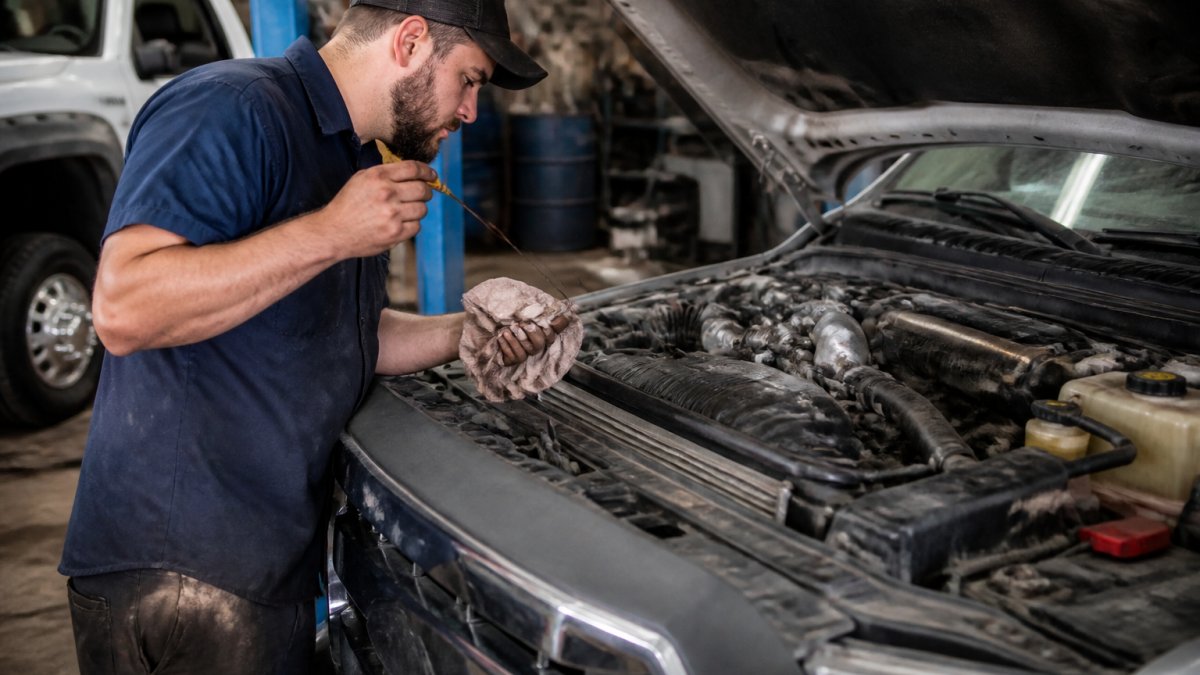
Check the oil level weekly and look at the color. Dark, gritty oil means it is past due. Check coolant, transmission fluid, brake fluid, and power steering fluid monthly.
Low fluid is often a symptom, not the problem. Find the leak.
Belts, Hoses, and Filters
Look for cracks, glazing, or fraying on belts. Squeeze hoses to feel for soft or brittle spots. Replace the air filter when it looks dirty, and the fuel filter on schedule.
A failed belt can strand you. It is one of the cheapest parts to replace early.
Tires and Brakes
Check tire pressure monthly and tread depth with a gauge. Replace tires before they hit the wear bars. Uneven wear points to alignment or suspension problems.
For brakes, listen for squeaks or grinding. Have the pads and rotors checked at every other oil change.
Reliable Used Trucks for Heavy Hauling: Maintenance Considerations
If you tow or haul heavy loads, your maintenance needs change. Reliable used trucks for heavy hauling need more frequent fluid changes, heavier-duty brakes, and a close eye on the cooling system. Heat is the enemy: towing raises transmission and engine temperatures, so fluid breaks down faster and the cooling system works harder than it ever did in highway-only service.
On a used truck, the bigger risk is that the previous owner towed without upgrading anything. Before you trust a used truck with a heavy trailer, verify the parts that actually carry the load.
Inspect the Towing and Upfit Equipment, Not Just the Drivetrain
Most used-truck guides stop at the engine and transmission. The work body is where a used truck hides expensive problems. Walk the truck and check:
- Hitch and receiver: Look for cracks, deep rust, or weld repairs at the frame mounts. A hitch rated for 10,000 lb that has been overloaded will show stress cracks near the bolt holes.
- Trailer wiring and brake controller: Test the 7-pin connector with a circuit tester. A brake controller that was spliced in with crimp connectors is a sign of rushed work.
- Auxiliary power and inverters: Confirm any inverter, compressor, or liftgate wiring is fused and sized correctly. Undersized wire overheats under load.
- Toolboxes and bed upfits: Check that mounting bolts are tight and that the bed floor is not cracked where the box was bolted through.
- Liftgate or crane: Cycle it through a full raise and lower before purchase. Hydraulic seals and cables are wear items, and a failed liftgate takes the truck out of service.
- Gooseneck or fifth-wheel: Inspect the mounting plate and the bed reinforcement underneath. A plate bolted to a thin bed floor will flex and crack.
Match the Truck to the Duty Cycle
A truck that was spec'd for light delivery and then put on a heavy trailer is being asked to do work it was not built for. Check the door jamb sticker for the gross vehicle weight rating (GVWR) and the gross combined weight rating (GCWR). Your loaded trailer plus the truck must stay under the GCWR.
Look for these features when you buy:
- A transmission cooler, ideally an auxiliary cooler mounted in front of the radiator
- Heavy-duty or upgraded brakes, and evidence the brake fluid was flushed on schedule
- A tow package rated for your load, with the rating documented
- A service history showing regular fluid changes, especially transmission and differential
- A rear axle ratio suited to towing rather than highway fuel economy
A truck built for work holds up better than one that was never pushed. But a truck pushed past its rating is a repair bill waiting to happen, no matter how good it looks.
Fleet Maintenance Cost Reduction Strategies for Small Operators
Fleet maintenance cost reduction strategies work best when you plan repairs instead of reacting to them. A scheduled oil change costs far less than an engine replacement. The problem for a small operator running a used truck is that you do not know what the last owner deferred, so your first year of costs is unpredictable.
The fix is to build a maintenance budget from the truck's actual condition and duty cycle, not from a generic number.
Build a Baseline Budget From the Truck You Actually Bought
Start with a full inspection by a mechanic you trust. Have them list every item as one of three categories:
- Due now: safety items and anything that will fail soon
- Due this year: wear items with measurable life left
- Monitor: items that are fine today but are known weak points on that model
Price the "due now" list before you buy the truck, or before you put it into service. That number is your true acquisition cost. Then set aside a monthly reserve for the "due this year" list. A common pattern among small operators is to reserve the cost of one major repair per year, divided into monthly deposits, so a surprise does not stop the work.
Track the Numbers That Predict a Breakdown
Track these simple numbers:
- Cost per mile for maintenance, calculated as total maintenance spend divided by miles driven
- Downtime hours per month, including the time you spend diagnosing and sourcing parts
- Number of roadside breakdowns, and what each one cost beyond the repair
- Deferred items, or the count of known issues you have chosen not to fix yet
When one number climbs, find out why. A rising cost per mile usually means a wear item is failing in stages, or that a repair was done twice because the root cause was missed. A rising downtime number usually means parts availability, not labor.
Decide Repair Versus Replace With Real Numbers
At some point a used work truck costs more to keep than to replace. Compare the annual maintenance and downtime cost against a year of payments on a replacement. If the old truck's annual cost is more than half of a replacement payment and the truck is still needed daily, the math usually favors replacing it.
Small operators who log their service and watch these figures spend less over a year than those who fix things only when they break. The log is what turns a guess into a decision.
Prioritizing Repairs by Safety and Urgency
Fix safety items first, always. Brakes, tires, steering, and lights come before anything cosmetic.
Use this order:
- Safety-critical: brakes, tires, steering, lights
- Stranding risk: belts, hoses, battery, cooling system
- Performance: filters, fluids, tune-ups
- Cosmetic: bodywork, interior, paint
If money is tight, handle the top two tiers first. A truck that stops and steers safely keeps you working.
Conclusion: Keep Your Used Work Truck Road-Ready
A used truck rewards the owner who pays attention. Daily checks, a real schedule, and quick fixes on safety items keep you on the road and out of the shop.
At CDM Truck And Cycle Sales, we help buyers find dependable work trucks and understand what they are getting. We offer a stress-free buying experience, source specific vehicles through our industry network, and buy your trade-in even if you do not buy from us.
Search our inventory and find a truck built to work.
Frequently Asked Questions
How often should I perform preventive maintenance on a used work truck?
Follow the manufacturer's service intervals, but for used work trucks, a good rule is oil and filter changes every 5,000 to 7,000 miles, tire rotations every 6,000 miles, and brake inspections annually. If you drive in severe conditions like heavy towing or dusty environments, shorten these intervals. A preventive maintenance checklist for commercial trucks helps you stay on track and avoid breakdowns.
What are the most common mechanical issues in older work trucks?
Older work trucks often face worn brake pads, leaking hoses, cracked belts, and suspension wear. Electrical problems like faulty fuses and lights are also common. Regular inspections can catch these early. Pay attention to unusual noises such as squeaks or grinding, which can indicate brake or bearing issues. Addressing small problems quickly prevents costly repairs.
How does regular maintenance affect the resale value of a used work truck?
Regular maintenance with documented records can increase resale value by showing the truck has been cared for. Buyers are more willing to pay a premium for a well-maintained used truck. Keeping a log of oil changes, tire rotations, and repairs demonstrates reliability and can set your truck apart in the market.
What should I check before a long haul with a used truck?
Before a long haul, inspect tire pressure and tread, check all fluids (oil, coolant, brake, transmission), test lights and signals, and ensure brakes are responsive. Look for leaks under the truck and listen for any unusual noises. A pre-trip inspection checklist is essential for reliable used trucks for heavy hauling. Also, pack a basic tool kit and spare fuses.
Buying a used work truck is a big decision, and the last thing you want is a surprise repair bill in month one. CDM Truck And Cycle Sales makes it simple with a stress-free buying process, high-quality trucks at affordable prices, and a team that sources the exact vehicle you need through our industry network. We will even buy your trade-in whether or not you buy from us. Get started with CDM Truck And Cycle Sales and drive off in a truck you can trust.