 How-to
7 Steps to Getting a Fair Trade-In Value for Trucks
Last Updated: October 26, 2026
Quick Summary
The trade-in value for trucks depends on age, mileage, condition, and market demand, but truck-specific factors like cab style, bed length, drivetrain, and work history also significantly affect the baseline appraisal. Getting a fair trade-in value for trucks requires researching online estimates, documenting service history, comparing dealer offers, and negotiating the trade-in value separately from the new vehicle purchase.
- Mileage is a major value driver; an 80,000-mile truck appraises significantly higher than a 150,000-mile one.
- Configuration matters: crew cab short beds and four-wheel drive typically appraise higher than regular cab long beds.
- Trade-in offers are typically 10-20% below private-party value because dealers buy at wholesale prices.
- Get 3+ online estimates and compare listings for similar trucks within 100 miles to establish your baseline range.
- Separate the trade-in value negotiation from the new vehicle price and get all numbers in writing before signing.
Table of Contents
- Understand What Affects Your Truck's Trade-In Value
- Use a Used Truck Value Estimator to Get Your Baseline
- Document Your Truck's Condition and Service History
- Compare Trade-In Value vs. Private Sale Options
- How to Negotiate a Trade-In Value with Dealers
- Use a Trade-In Negotiation Checklist Before You Offer
- Get Your Truck Appraised and Finalize the Deal
- Frequently Asked Questions
Understand What Affects Your Truck's Trade-In Value
The trade-in value for trucks depends on age, mileage, condition, and market demand for that make and model. But pickups aren't appraised like sedans: configuration, capability, and work history change the baseline.
Mileage is one of the biggest value drivers. An 80,000-mile truck appraises significantly higher than a 150,000-mile one of the same year and model.
Configuration is a truck-specific value lever. Dealers price cab style, bed length, drivetrain, and axle ratio against local demand.
Towing and payload equipment can help or hurt. A factory tow package with an integrated brake controller, hitch receiver, and trailer wiring is a documented plus.
Work-truck wear is evaluated differently from passenger-car wear. Dealers check the bed floor, tailgate, interior, and frame for rust.
Vehicle condition matters more than most sellers realize. A truck with a clean service history, no rust, and a well-maintained interior commands a higher appraisal than one with visible wear or mechanical issues, since dealers factor in repair costs.
Market demand for your specific truck type affects the baseline value. Work trucks, pickup trucks, and specialty vehicles have different resale markets. Check Cox Automotive's used vehicle market insights to understand current market trends affecting truck valuations.
Location and local market conditions influence trade-in offers. A truck suited for heavy work may be worth more in rural or industrial areas than urban ones, since dealers adjust appraisals to local demand and inventory.
Understanding what drives value helps you prepare your truck for the best possible offer.
Use a Used Truck Value Estimator to Get Your Baseline
Before walking into a dealership, get a baseline estimate using online valuation tools that use real market data.
Start with a free online calculator. Most platforms ask for make, model, model year, trim, mileage, and condition, then show an estimated range within seconds, a reference point before any dealer appraisal.
Enter accurate information. Small details change the estimate significantly. If you understate miles or overstate condition, the dealer's appraisal will be lower than your estimate.
Compare estimates across multiple tools. Calculators differ in data sources and weighting; three estimates give you a realistic range rather than a single number.
Check for real-time data updates. The best valuation tools update weekly or more frequently to reflect current market conditions. Older data produces outdated estimates. According to Black Book's used vehicle market analysis, market values shift regularly based on auction data and wholesale conditions.
Note the retail value versus wholesale value. Retail value is what a private buyer might pay. Wholesale value is what dealers pay for trade-ins. Your trade-in offer will typically fall between these two numbers, closer to wholesale.
Document Your Truck's Condition and Service History
Dealers base appraisals partly on what they can verify about your truck's history and condition. Documentation strengthens your negotiating position and often leads to higher offers.
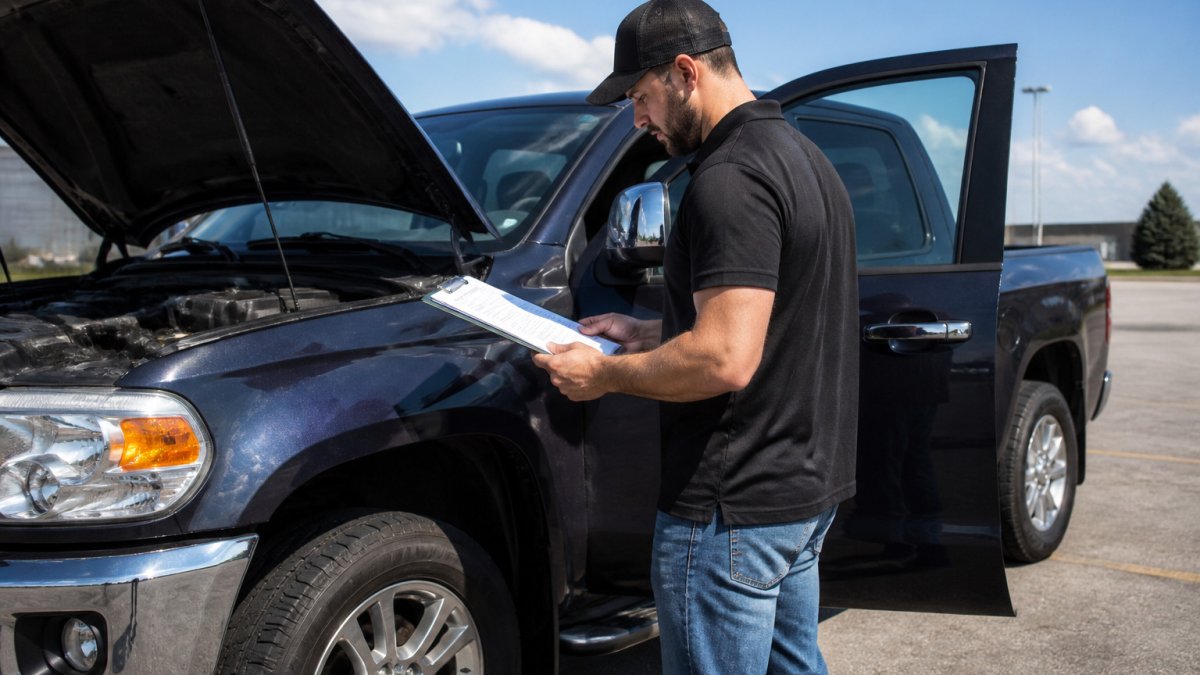
Gather all service records. Compile receipts for oil changes, maintenance, repairs, and inspections. A complete history proves the truck was cared for and reduces concern about hidden issues.
Get a pre-appraisal inspection. An independent mechanic can identify problems you can address or disclose upfront; surprises during the dealer's appraisal lower offers.
Clean and detail your truck thoroughly. A clean truck appraises higher than a dirty one. Wash the exterior, vacuum the interior, and remove personal items.
Document any upgrades or recent work. Keep receipts for quality parts, new tires, or recent repairs. Dealers may not give full credit, but documentation helps justify a higher valuation.
Take photos of the truck's condition. Capture the exterior, interior, engine bay, and wear areas to provide evidence if you dispute an appraisal later.
Compare Trade-In Value vs. Private Sale Options
Understanding the difference between trade-in value and private-party value helps you decide which selling method works best for your situation.
Trade-in value is typically lower than private-party value. Dealers buy at wholesale prices because they need margin to recondition the truck, cover overhead, and make profit. Expect a trade-in offer to be 10-20% below what a private buyer might pay.
Private sales take more time and effort. You handle marketing, showings, negotiations, and paperwork, but keep the full retail value if you find the right buyer.
Trade-in offers convenience and speed. You walk in, get appraised, and drive away with a new truck or payment credit the same day. For most people, this convenience is worth the lower price.
Consider your situation carefully. If you need a vehicle quickly or prefer simplicity, trade-in is the better choice. If you have time and want maximum value, explore anchor words for internal page to understand the cash sale alternative in detail.
Tax implications differ between options. When you trade in, the trade-in value often reduces your taxable purchase price on the new vehicle, lowering sales tax owed. Private sales don't offer this benefit. Check your local tax rules.
How to Negotiate a Trade-In Value with Dealers
Once you have a baseline estimate and documentation, use these strategies to negotiate the best possible offer.
Start the conversation before the appraisal. Tell the dealer upfront about condition, service history, and recent work to prevent low-ball offers based on incomplete information.
Build a local comparable set before you negotiate. Pull eight to twelve listings for the same make, model, cab style, bed length, drivetrain, and year range within roughly 100 miles, noting asking price, mileage, and condition.
Never accept the first offer immediately. Dealers expect negotiation.
Reference your online estimates and comparables calmly. Say something like, "I researched this truck on three valuation tools, and the range was between X and Y. I also found similar trucks listed locally in that range. Your offer is below that. Can you walk me through how you arrived at this number?" This opens dialogue without confrontation.
Separate the trade-in value from the new-vehicle deal. Negotiate the trade-in value first, then the new truck's price separately. Bundling makes it harder to see if either number is fair.
Understand the trade-in tax credit before you compare offers. In many states, the trade-in value reduces the taxable purchase price of the new vehicle, so a lower offer can be partly offset by lower sales tax.
Account for loan payoff and negative equity. If you still owe on the truck, request the exact payoff amount, including early-payoff fees, and compare it with the offer.
Ask about recent comparable sales. Dealers have local market data on what similar trucks sold for recently. Request it to ground your negotiation in real market evidence rather than a single appraisal.
Be prepared to walk away. If the offer stays well below your research, try another dealer or sell privately.
Transparency helps you feel confident in the offer.
Use a Trade-In Negotiation Checklist Before You Offer
Before finalizing any trade-in deal, work through this checklist to ensure you're making the right decision.
| Step | Action | Result |
|---|---|---|
| Research | Get 3+ online estimates | Know your truck's market range |
| Documentation | Gather service records and photos | Support your valuation claim |
| Inspection | Get independent mechanic check | Identify issues before appraisal |
| Preparation | Clean truck, detail interior | Maximize first impression |
| Appraisal | Request dealer's written offer | Get offer in writing with reasoning |
| Comparison | Get quotes from 2-3 dealers | See competitive offers |
| Separation | Negotiate trade-in and new truck separately | Avoid bundling confusion |
| Verification | Ask for comparable sales data | Ground offer in market evidence |
| Finalization | Review all numbers before signing | Catch errors or discrepancies |
Get everything in writing. Verbal offers can change. Before signing, confirm the trade-in value, new truck's price, warranties, and all fees in writing.
Transparency helps you feel confident in the offer.
Get Your Truck Appraised and Finalize the Deal
The final step is the formal appraisal and deal closure. This is where research and preparation pay off.
Schedule the appraisal at a time that works for you. A rushed appraisal often yields a lower offer because the appraiser has less time to inspect thoroughly.
Be present during the appraisal. Walk around with the appraiser and point out maintenance, upgrades, and the truck's strong points. This isn't arguing, it's providing context that affects the valuation.
Ask for the appraiser's written report. Request details on how the offer was calculated: the condition rating assigned and the comparable sales referenced. This documentation protects you if you need to dispute the offer later.
Confirm all numbers before signing. Review the trade-in value, new truck's price, add-ons or warranties, documentation fees, and final amount owed. Dealers sometimes adjust numbers at the last minute, catch these before you sign.
Understand your warranty and return options. Ask what happens if the truck has problems after you drive it home, and get any coverage period in writing.
Complete the title transfer properly. Ensure the dealer handles all paperwork correctly. You should receive a new title and registration for the truck you're buying.
Getting a fair trade-in value for trucks requires research, preparation, and clear negotiation. When you're ready to trade in, AutoFinder's depreciation data provides current market context to validate your research one final time before signing.
Frequently Asked Questions
How do I find the fair trade-in value of my truck?
Start with a used truck value estimator to get your baseline. Enter your truck's make, model, year, trim, mileage, and condition. Compare results from multiple sources to see the range. Then research local market demand and check comparable trucks in your area. CDM Truck And Cycle Sales will buy your trade-in even if you don't buy from us.
What affects a truck's trade-in value the most?
Mileage, condition, and market demand are the biggest factors. A truck with lower mileage and no mechanical issues will command a higher trade-in value. Service records prove maintenance and boost your offer. Local market demand matters too, trucks suited for work or recreation may be worth more in your region. Year and trim level also affect value; newer models and higher trims typically trade in for more.
Should I repair my truck before trading it in?
Only repair major mechanical issues that affect safety or function. Minor cosmetic fixes often don't return their cost at trade-in. Focus instead on cleaning, detailing, and organizing your service records. Dealers will factor repair costs into their offer anyway. If your truck has a known problem, disclose it upfront, transparency helps you negotiate a fair price rather than being surprised by a lower offer after inspection.
Is trade-in value lower than what I'd get selling privately?
Usually yes. Private sale prices are typically 10-20% higher because you're selling directly to a buyer without a dealer middleman. However, trade-in offers are faster, require less work, and you can apply the value immediately to your next purchase. If you need quick cash or want simplicity, trade-in may be worth the lower price. Compare both options using your valuation estimates to decide which works best for your situation.
At CDM Truck And Cycle Sales, we buy your trade-in fairly, even if you don't purchase from us. We'll evaluate your truck using current market data, show you our appraisal reasoning, and make an offer that reflects real market value. Our network helps us move inventory quickly, which means we can offer competitive prices. Get started with a trade-in appraisal and see what your truck is worth today.