 How-to
Avoiding Hidden Fees at Car Dealerships: 2026 Guide
Table of Contents
- Why Hidden Fees Appear on the Buyer's Order
- Car Dealership Fees to Avoid: 8 Charges Buyers Can Question
- How to Negotiate Car Dealer Fees Before You Sign
- What a Fair Out-the-Door Price Car Quote Should Include
- Your Car Buying Fee Checklist: Reviewing the Purchase Contract Line by Line
- Financing and Trade-In Effects on Fee Transparency
- What to Do When a Dealer Refuses to Remove a Fee
- Frequently Asked Questions
- Conclusion: A Clean Deal Starts With a Clear Breakdown
Last Updated: October 5, 2026
Why Hidden Fees Appear on the Buyer's Order
Avoiding hidden fees at car dealerships starts with understanding one document: the buyer's order. This is the worksheet a dealer uses to build your deal, and it is where extra charges quietly appear.
Here is the core problem. A dealer advertises a low vehicle price, then adds charges later in the process.
The buyer's order is not the final contract. It is a proposal. You can read it, question it, and ask for changes.
Vehicle Price vs. the Out-the-Door Price
The vehicle price is what the car itself costs. The out-the-door price is everything you actually pay: vehicle price plus tax, title, registration, and any dealer fees. These two numbers can differ by thousands of dollars.
That gap is where surprises live. Always ask for the out-the-door price in writing before you discuss monthly payments.
Car Dealership Fees to Avoid: 8 Charges Buyers Can Question
Car dealership fees to avoid are not automatically illegal, but most are negotiable. Here are eight charges worth a hard look:
- Documentation fee - covers paperwork processing; often inflated well beyond the real cost
- Dealer preparation fee - claimed cleaning and inspection work
- Destination charge - a real manufacturer cost, but sometimes marked up
- Advertising fee - a regional cost passed to you
- Administrative costs - vague catch-all line items
- VIN etching - a chemical etch you can often buy elsewhere for less
- Paint protection and fabric coating - dealer-installed add-ons with high margins
- Credit life or disability insurance - optional products, never required
Some of these are legitimate. Others are pure padding. Your job is to tell them apart.
Dealer-Installed Add-Ons and Protection Packages
Add-on products are the biggest source of quiet markup. A protection package might include paint protection, fabric guard, and VIN etching bundled into one price.
Ask one question: was this already on the vehicle when I arrived? If yes, you can often refuse to pay for it. If the dealer installed it after you agreed to buy, that is their choice, not your obligation.
How to Negotiate Car Dealer Fees Before You Sign
Learning how to negotiate car dealer fees comes down to timing. Negotiate the out-the-door price, not the monthly payment. Monthly figures hide interest and fees.
Try this approach:
- Ask for a written out-the-door quote from each dealership
- Compare the totals side by side, not the vehicle prices
- Question every fee you do not recognize
Dealers expect negotiation on the vehicle price. Fewer buyers push back on fees, which is why fees are where the margin hides.
FTC guidance on buying and financing a car
What a Fair Out-the-Door Price Car Quote Should Include
A fair out-the-door quote lists every charge in plain language, on one page, for one specific vehicle identified by VIN or stock number. If a number appears without an explanation, ask for one. If the quote is verbal, it is not a quote.
A complete quote should show:
- Vehicle price and any discount or rebate, itemized
- Sales tax, calculated for your county of registration
- Title fee and registration fee, listed as government charges
Legitimate government charges like tax, title, and registration are not negotiable. Dealer fees usually are. Knowing the difference protects your wallet.
The Problem With Comparing Advertised Prices
Two dealerships can advertise the same vehicle at prices that differ by a few thousand dollars and still land on the same out-the-door total. The advertised price often excludes tax, title, registration, documentation, and add-ons that were already installed on the unit. That is why you compare totals, not stickers.
Build a Standardized Quote Template
The single most useful tool for avoiding hidden fees is a quote sheet you control. Send the same request to every dealership and require the same format back. A workable template has these rows:
| Line item | Dealer A | Dealer B | Dealer C |
|---|---|---|---|
| Vehicle (year/make/model/trim, VIN or stock #) | |||
| Vehicle price | |||
| Manufacturer rebate applied | |||
| Dealer discount | |||
| Documentation fee | |||
| Dealer preparation / admin fee | |||
| Add-ons (list each, with price) | |||
| Sales tax | |||
| Title fee | |||
| Registration fee | |||
| Trade-in credit | |||
| Out-the-door total |
Three rules make the template work:
- Same vehicle, same trim, same equipment. Comparing a base model to a loaded one tells you nothing.
- Same date. Incentives and rates change, sometimes mid-month. A quote from three weeks ago is not comparable.
- Written, not spoken. Ask for the sheet by email so the numbers cannot drift when you arrive.
Read the Fine Print on the Quote
A quote can be technically accurate and still mislead. Watch for these patterns:
- "Plus tax, title, and fees" in small print under a large advertised price
- Add-ons already installed that appear in the total but not in the advertised price
- Conditional rebates (military, loyalty, recent college grad) baked into the price you may not qualify for
If a quote does not survive being retyped into your own template line by line, treat it as incomplete and ask again.
When the Numbers Do Not Match at the Dealership
If the finance office presents a total higher than your written quote, do not sign. Ask them to reconcile the two documents line by line. Common explanations include a different tax rate for your registration address, an add-on that was not on the original quote, or a rebate you were assumed to qualify for. Some of those are legitimate corrections; some are not.
Your Car Buying Fee Checklist: Reviewing the Purchase Contract Line by Line
Reviewing the purchase contract is a step-by-step process, not a quick glance. Work through it in order, and do not let anyone rush you past a line you do not understand.
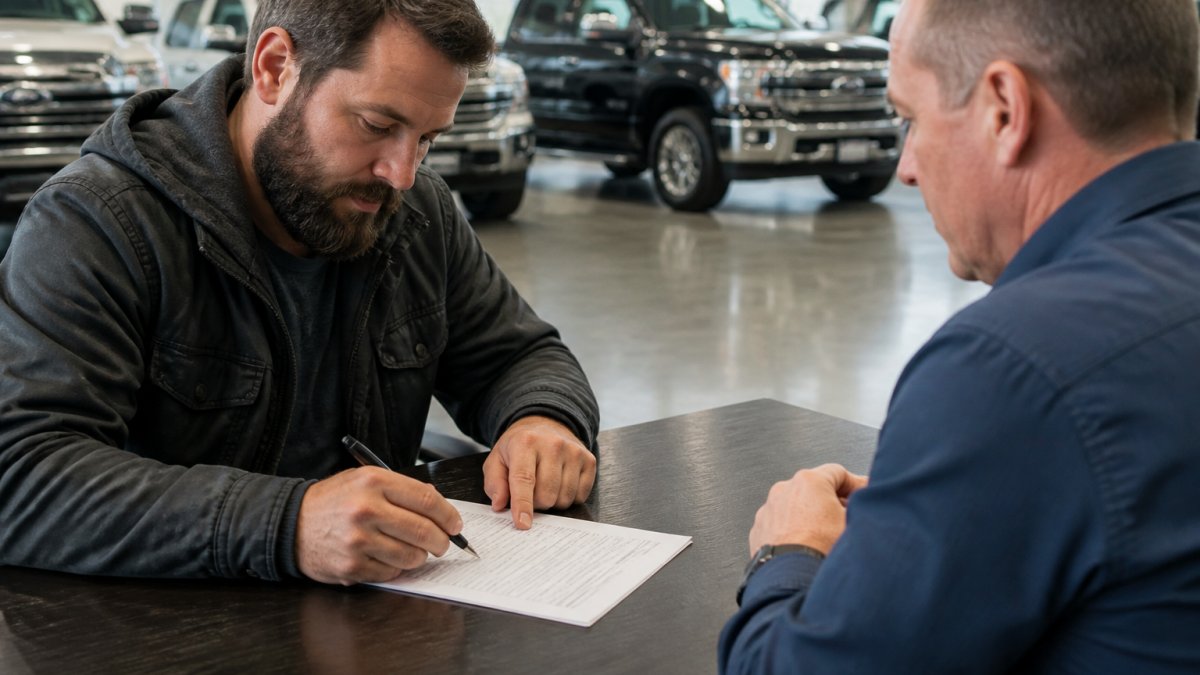
Step 1: Confirm the Vehicle Itself
Before you look at a single dollar figure, confirm the top of the document identifies the exact vehicle you agreed to buy. Check the year, make, model, trim, and VIN against the vehicle on the lot and against your written quote. A mismatch here can mean you are signing for a different unit than the one you negotiated.
Step 2: Audit the Price Block
- Confirm the vehicle price matches your written quote
- Confirm any rebate or discount is listed as its own line, not folded into the price
- Confirm the trade-in credit matches the offer you accepted, and that it is shown separately from the vehicle price
Step 3: Audit the Government Charges
- Check the sales tax rate against your county of registration, not the dealership's location
- Verify title and registration fees are listed as government charges, with the amounts matching your state's published schedule
- Confirm there is no separate "electronic filing" or "tag agency" charge that duplicates the title or registration line
Step 4: Audit the Dealer Charges
- Question every documentation or admin fee, and compare it to the amount on your written quote
- Confirm no add-ons appear that you did not approve in writing
- Check for duplicate charges on the same service (for example, a "prep fee" and a "detail fee" for the same work)
Step 5: Audit the Finance and Insurance Block
If you are financing through the dealership, this is where the total cost can drift:
- Confirm the interest rate (APR) matches what you agreed
- Confirm the loan term in months matches what you agreed
- Confirm the monthly payment is the product of the amount financed, the rate, and the term, not a rounded figure that hides a longer loan
Step 6: Confirm the Out-the-Door Total
Add the lines yourself. The total on the contract should equal your written out-the-door quote, adjusted only for legitimate changes you agreed to. If it does not, stop and ask for a line-by-line reconciliation.
Step 7: Get It in Writing Before You Sign
Any change you negotiate at the desk, whether a fee removed or an add-on dropped, should appear on the revised document before you sign. A verbal promise is not enforceable. If the finance manager says they will "take care of it later," ask them to take care of it now, on paper.
Quick Reference Checklist
- Vehicle year, make, model, trim, and VIN match the unit and your quote
- Vehicle price matches your written quote
- Rebates and discounts are itemized, not folded in
- Trade-in credit is shown separately and matches your offer
Financing and Trade-In Effects on Fee Transparency
Financing and trade-ins can cloud the whole picture. When you negotiate by monthly payment, a dealer can stretch the loan term to hide a higher total cost.
Trade-ins work the same way. A generous trade-in offer can mask an inflated vehicle price. Ask for the trade-in value and the vehicle price as separate numbers.
Pay cash or arrange financing through your own bank first. Then you can see every fee clearly, without the numbers blurring together.
What to Do When a Dealer Refuses to Remove a Fee
When a dealer refuses to remove a fee, you have options. First, ask them to explain exactly what the fee covers.
Next, put your request in writing. Ask for the removal in an email so there is a record.
If you believe a charge is deceptive, you can file a complaint. The FTC's consumer complaint portal accepts reports about unfair dealer practices.
No deal is worth signing under pressure. A fair dealer will explain every line.
Frequently Asked Questions
What fees can a car dealership legally charge?
Dealerships can legally charge fees for actual services and government-required costs, such as sales tax, title and registration filing, and a documentation fee where state law allows it. The key is disclosure: every charge should appear on the buyer's order before you sign. Fees for add-on products like paint protection or VIN etching are optional and must be presented as such. If a charge is not tied to a service, a product, or a government requirement, ask for a written explanation.
Which car dealership fees are negotiable?
Documentation fees, dealer preparation charges, and dealer-installed add-ons are often negotiable, though some states cap the doc fee. Government fees like sales tax, title, and registration are set by the state and are not negotiable. When you negotiate car dealer fees, focus on the total out-the-door price rather than each line item, and ask for the final number in writing before you discuss financing or trade-in.
How can I tell if a dealership fee is legitimate?
A legitimate fee comes with a clear explanation and appears on an itemized breakdown of the buyer's order. Compare the charge to your state's rules: for example, many states cap documentation fees, and some require that add-on products be optional. If a fee is described only as administrative costs or a mandatory fee with no service attached, ask the dealer to point to the specific product or government charge it covers. If they cannot, it is worth questioning.
What should I do if a dealer adds unexpected charges to the contract?
Stop and ask for a revised buyer's order that matches the out-the-door price you agreed on. You can refuse to sign until every line is explained. If the dealer will not remove an unauthorized add-on, you can walk away, then file a complaint with your state attorney general's consumer protection division. Keep copies of all quotes and the final contract so you have a paper trail if you need to escalate.
Conclusion: A Clean Deal Starts With a Clear Breakdown
Hidden fees thrive on confusion, and the fix is a clear, itemized breakdown you can read before you sign. At CDM Truck And Cycle Sales, we show you every charge up front, buy your trade-in even if you do not buy from us, and use our industry network to find the exact vehicle you want. Get started with CDM Truck And Cycle Sales and enjoy a stress-free, transparent buying experience.