 blog
9 Essential Motorcycle Safety Gear Items for Beginners
Last Updated: October 29, 2026
Quick Summary
Essential motorcycle safety gear for beginners covers the head, body, hands, legs, and feet, and every new rider should own all five before the first ride. Gear reduces the harm a crash causes rather than preventing the crash itself. Start with a DOT-certified helmet, which is the most important item on the list.
- A DOT label means the helmet meets FMVSS 218, the minimum federal standard enforced by NHTSA.
- A full-face helmet is usually the safer default for new riders because chin injuries are common in falls.
- Buy the helmet, gloves, and over-the-ankle boots first, since they cover the most serious injury risks.
- Never buy a used helmet unless you know its history, because an impact can compromise the shell.
- Replace any helmet or armor after a crash and check the date code inside the helmet before buying.
Table of Contents
- Why Gear Matters More Than You Think When You're Starting Out
- Essential Motorcycle Safety Gear for Beginners: The Core Checklist
- Choosing a Motorcycle Helmet for Beginners and Checking Its Safety Certification
- Motorcycle Jacket With Armor: Protection Levels and Riding Conditions
- Motorcycle Gloves for Beginners: Grip, Feel, and Hard Knuckle Protection
- Motorcycle Boots for New Riders and Protective Pants
- Eye Protection, Visibility, and Rain Gear
- Buying Your Gear on a Budget: A Prioritized Order and Care Tips
- Frequently Asked Questions
Why Gear Matters More Than You Think When You're Starting Out
Motorcycle safety gear is the one part of riding you control completely, and it matters most in the first months, when skills are still forming. Many new riders focus on the bike and the purchase price while treating protective clothing as an afterthought. That order is backward. Gear does its job in the moment you come off the bike, and beginners are the riders most likely to need it.
Protective gear does not prevent a crash. It reduces the harm a crash causes. The helmet, jacket, gloves, pants, and boots each cover a different kind of injury, from head trauma to road rash to broken fingers. A rider who wears all of them has a much better chance of walking away from a low-speed fall than one who wears a t-shirt and jeans.
Beginners also tend to fall in ways experienced riders avoid, such as tipping over at a stop, dropping the bike in a parking lot, or sliding on gravel. Those falls happen at low speed, but they still cause scrapes and fractures. Full protection makes these common mistakes far less costly.
Essential Motorcycle Safety Gear for Beginners: The Core Checklist
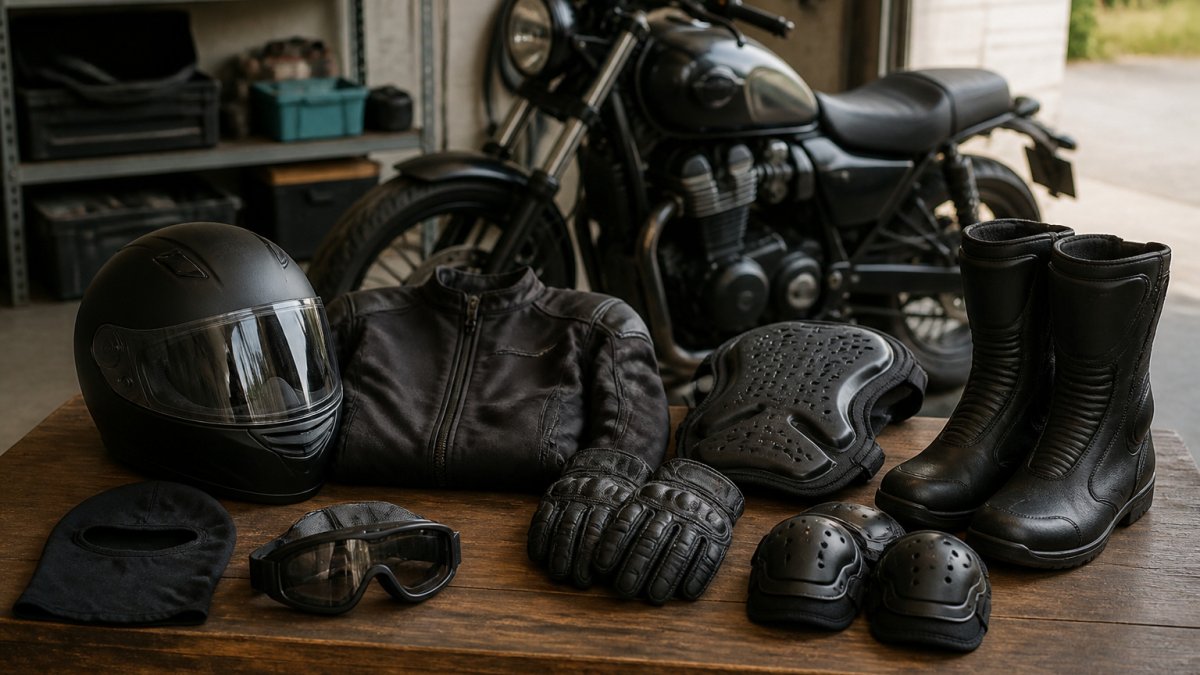
A basic kit covers the head, body, hands, legs, and feet. Every rider should have all five before the first ride. Many beginners are surprised that their everyday clothing offers almost no protection.
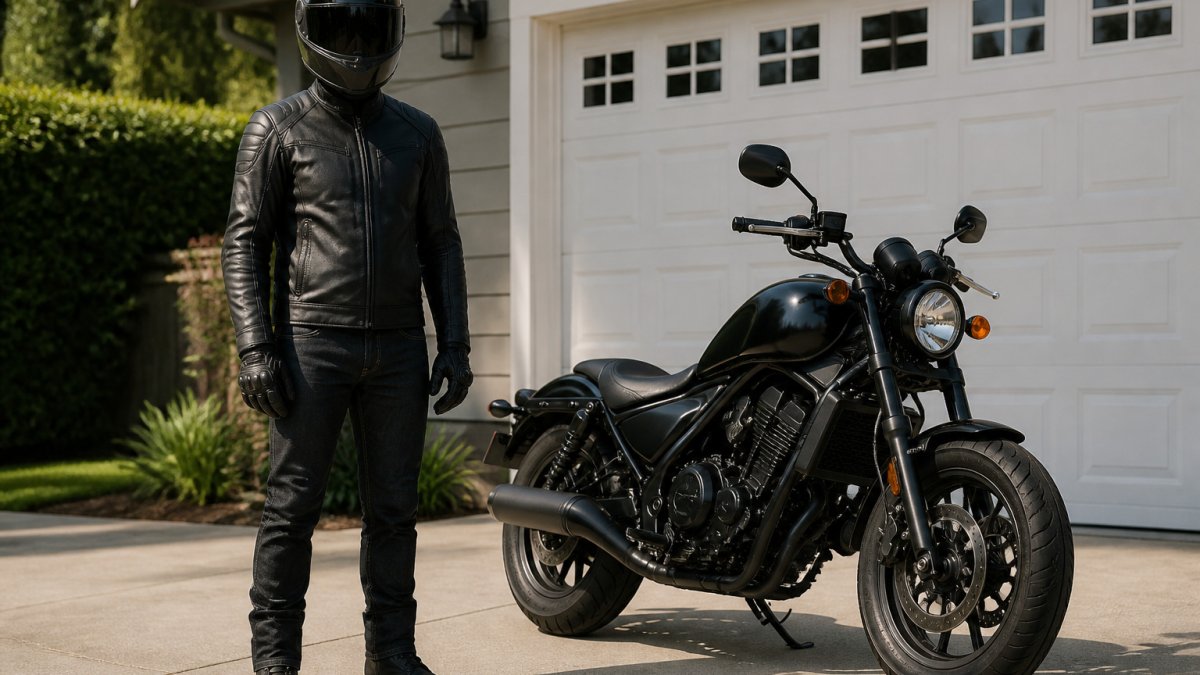
- Helmet: Protects the head and brain. It should be the first purchase and the last thing you compromise on.
- Jacket with armor: Covers the torso, shoulders, and elbows, with impact-rated armor in the key zones.
- Gloves: Protect the hands and fingers, which are often the first thing to hit the ground.
- Pants: Reinforced riding pants cover the hips, thighs, and knees.
- Over-the-ankle boots: Protect the feet, ankles, and shins, and provide grip for shifting and braking.
- Eye protection: A face shield or goggles keeps wind, debris, and insects out of your eyes.
A 2026 beginner guide from Sprocketz lists a DOT-approved helmet, over-the-ankle footwear, long pants, long sleeves, and gloves as the minimum gear. That matches the core list above. Sprocketz Ultimate Motorcycle Gear Guide for Beginners
Choosing a Motorcycle Helmet for Beginners and Checking Its Safety Certification
The helmet is the most important item on the list, and the label inside it tells you what testing it has passed. Beginners should learn to read that label before they look at graphics or price.
DOT certification. A DOT label means the helmet meets Federal Motor Vehicle Safety Standard 218, the minimum federal requirement enforced by the National Highway Traffic Safety Administration (NHTSA). NHTSA motorcycle helmet safety standards FMVSS 218 covers impact attenuation, penetration resistance, retention system strength, and labeling. It is a floor, not a ceiling, a DOT label confirms the helmet passed a baseline test, not that it is the best available.
Snell certification. Some helmets also carry voluntary certification labels from independent testing organizations. Such a label is not a government requirement, and not every good helmet carries one.
What the labels do not tell you: they do not measure fit, comfort, noise, or how well the helmet stays put in a real crash. A certified helmet that fits poorly protects less than a certified helmet that fits correctly. Use certification to narrow the field, then use fit to make the final choice.
A motorcycle helmet for beginners should fit snugly without causing pressure points. Helmets that look like bargains often fail the fit test, so try before you buy whenever possible.
Full-Face vs. Open-Face: Which Suits a New Rider
A full-face helmet covers the chin, jaw, and face. It is the strongest choice for most beginners because chin injuries are common in falls. An open-face helmet offers more airflow and visibility, but it leaves the face exposed. For a new rider, the full-face option is usually the safer default, especially if you pair it with a face shield.
How to Check Helmet Fit
Put the helmet on, fasten the strap, and shake your head. The helmet should not rotate or slide over your eyebrows. Check that your cheeks are pressed slightly and that the helmet does not shift when you move your jaw. Replace any helmet that has been dropped hard or used in a crash, even if it looks undamaged.
Motorcycle Jacket With Armor: Protection Levels and Riding Conditions
A motorcycle jacket with armor protects the shoulders, elbows, and back. Armor is usually rated by impact performance, and the rating matters more than the jacket's style. Choose a leather or textile jacket that fits snugly enough to stay in place during a slide.
Match the jacket to your riding conditions. Leather offers strong abrasion resistance, while textile jackets are lighter and often include waterproof liners for rain. Ventilated mesh jackets work in heat but give less abrasion protection, so many beginners choose a summer textile jacket with some ventilation.
Motorcycle Gloves for Beginners: Grip, Feel, and Hard Knuckle Protection
Gloves are the item beginners most often skip, and hands are among the most injured body parts in motorcycle crashes. Look for reinforced palms, sturdy stitching, and protective armor over the knuckles. Hard knuckle armor protects against impact, while reinforced palms resist abrasion during a slide.
Gloves should also let you work the clutch, throttle, and brakes comfortably. Thick gloves that reduce feel can make early riding harder. Try a pair with a snug fit and test your control before buying.
Motorcycle Boots for New Riders and Protective Pants
Motorcycle boots for new riders should be over the ankle, with a firm sole for shifting and a reinforced toe box. Regular sneakers and work boots do not offer the same ankle support or impact protection. Good boots also grip the foot pegs and keep your feet safe from hot exhaust pipes.
Riding pants should cover the hips, thighs, and knees, with armor in the knee zones. Jeans offer little protection and can wear through quickly in a slide. Reinforced riding pants are the better choice.
Eye Protection, Visibility, and Rain Gear
A face shield or goggles keeps debris, wind, and insects out of your eyes. Clear lenses are the default for most riding, while tinted shields help in bright sun. Keep spares handy, since scratched shields reduce visibility.
Reflective clothing and high-visibility gear help other drivers see you, especially at dusk and in rain. Still, visibility depends on riding positioning and attention as well as clothing. Rain gear keeps you warm and dry, which matters because cold, wet riders make worse decisions. Check whether a rain suit is rated for abrasion as well as water.
Buying Your Gear on a Budget: A Prioritized Order and Care Tips
Most beginners cannot buy a full kit at once, and that is fine. What matters is the order you buy in and where you refuse to compromise. A practical approach is to think in three tiers.
Tier 1, non-negotiable first purchases. Helmet, gloves, and over-the-ankle boots. These cover the injuries most likely to be serious or permanent: head trauma, hand and wrist damage, and ankle and foot injuries. A DOT-certified full-face helmet, a pair of reinforced gloves with palm sliders, and a pair of riding boots are the minimum before the first ride. Do not buy a used helmet unless you know its history, an impact can compromise the shell even when the outside looks fine.
Tier 2, buy within the first month. A riding jacket with shoulder, elbow, and back armor, and riding pants with knee armor. If budget is tight, a jacket with armor is a better first buy than pants, because the torso and arms are exposed in more fall types.
Tier 3, add as you ride more. Eye protection if your helmet does not have a face shield, rain gear, and high-visibility layers. These improve comfort and visibility rather than replacing impact protection, so they can wait until the core kit is complete.
| Item | Priority | Why It Comes First | Where Budget Cuts Hurt Most |
|---|---|---|---|
| Helmet | 1 | Head injuries are the most serious risk | Cheap shells may pass DOT but fit poorly; never buy used |
| Gloves | 2 | Hands hit the ground first in many falls | Thin palms and soft knuckles wear through fast |
| Boots | 3 | Protect ankles and feet from pegs and exhaust | Sneakers and work boots lack ankle support |
| Jacket | 4 | Covers torso, shoulders, and elbows | Mesh without armor gives abrasion but little impact protection |
| Pants | 5 | Protect hips, thighs, and knees | Denim wears through quickly in a slide |
| Eye protection and rain gear | 6 | Comfort and visibility, added last | Scratched shields reduce visibility |
Where lower-cost options compromise protection. The biggest savings usually come from thinner armor, less abrasion-resistant fabric, and weaker stitching. A budget jacket can still be a good buy if it has CE-rated armor and reinforced seams; a budget glove is a poor buy if the palm is single-layer leather with no slider. Read the armor rating, not the price tag.
Care and gear lifespan. Clean leather with a conditioner, store helmets away from heat and sunlight, and replace any helmet or armor after a crash. Check straps, zippers, and seams regularly, because worn gear protects less than it appears to. Check the manufacturer's documentation for a recommended replacement interval, since protective foam can degrade over time even without a crash. Check the date code inside the helmet before you buy.
For pricing on any item, check the current listing on the seller's website, since prices vary by brand and model.
Frequently Asked Questions
What safety gear does a beginner motorcycle rider need?
At minimum, a beginner needs a helmet that meets DOT standards, over-the-ankle footwear, long pants, a long-sleeve jacket, and full-fingered gloves. Eye protection is also strongly recommended, since wind, debris, and insects can impair vision at road speeds. Start with the helmet and boots, then add armored layers as your budget allows.
What should a new motorcycle rider buy first?
Buy a properly fitted DOT-compliant helmet first, because head protection matters most in a crash. Next, get over-the-ankle boots and gloves, since these protect the parts of the body that most often hit the road in a fall. A jacket and pants with armor come after that. Buying in this order keeps the most critical protection in place even on a tight budget.
Is a full-face helmet safest for beginners?
A full-face helmet covers the chin, jaw, and face, which is where many motorcycle impacts occur, so it generally offers the most complete protection for new riders. Open-face and three-quarter helmets leave the face exposed. Choose a full-face model that is DOT-compliant, fits snugly without pressure points, and has a clear, scratch-resistant shield.
Do beginner motorcycle riders need armored jackets and pants?
Armored jackets and pants are strongly recommended because they reduce abrasion and impact injuries to the shoulders, elbows, hips, and knees. Look for CE-rated or similar impact armor in those zones. Riders who plan to ride in hot weather can choose mesh or ventilated gear with armor so they stay comfortable without giving up protection.
Ready to start riding? Search All Vehicles at CDM Truck And Cycle Sales to find a pre-owned motorcycle or truck that suits your needs and budget, and let us help you with a fair trade-in on your current vehicle.